The quick version
- That is a statement about western Norway, not about bravado.
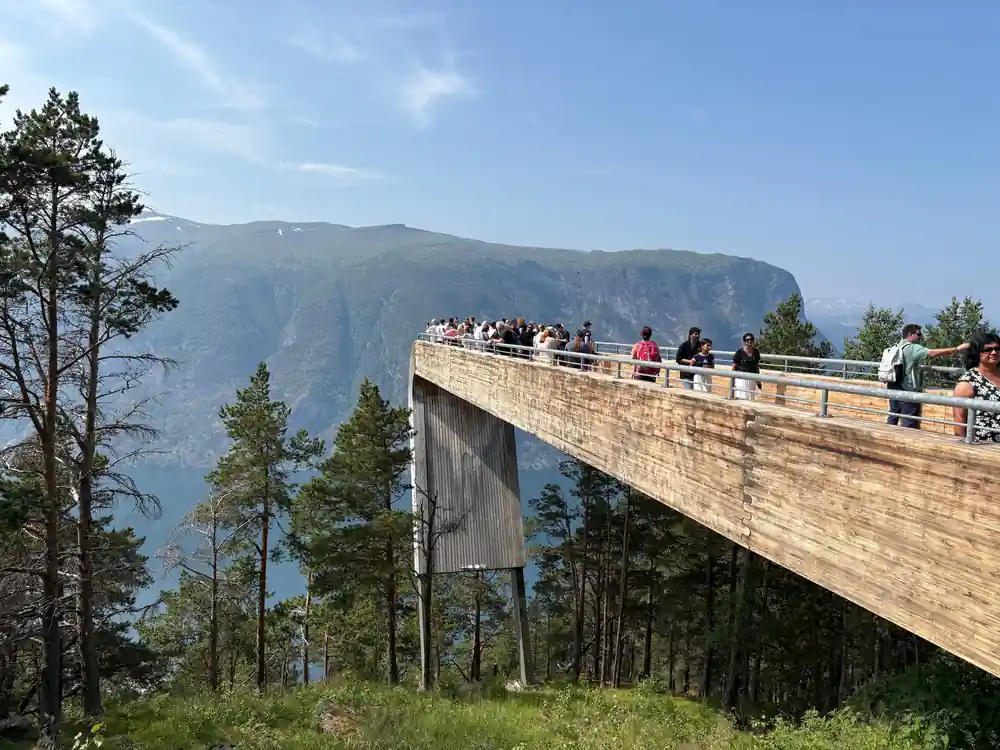
- A warm coach, a cold deck, a wet waterfall and 650 metres of wind.
- One thick coat is the wrong answer. Layers you can shed are the right one.
- Summer gives you the whole day lit. Winter does not.
The season, month by month
Late spring is the powerful version. Snowmelt is coming off the high ground, so every waterfall on the route runs hard, Tvindefossen included, and the fjord walls carry water everywhere. Days are already long. The high mountain roads may still be shut, which does not affect this itinerary because it only uses the lower section to Stegastein.
Summer is the reliable version. Long days, everything open, the warmest weather this coast produces, and the busiest boats and roads. If you want the highest chance of a clear afternoon at six hundred and fifty metres, this is when to come.
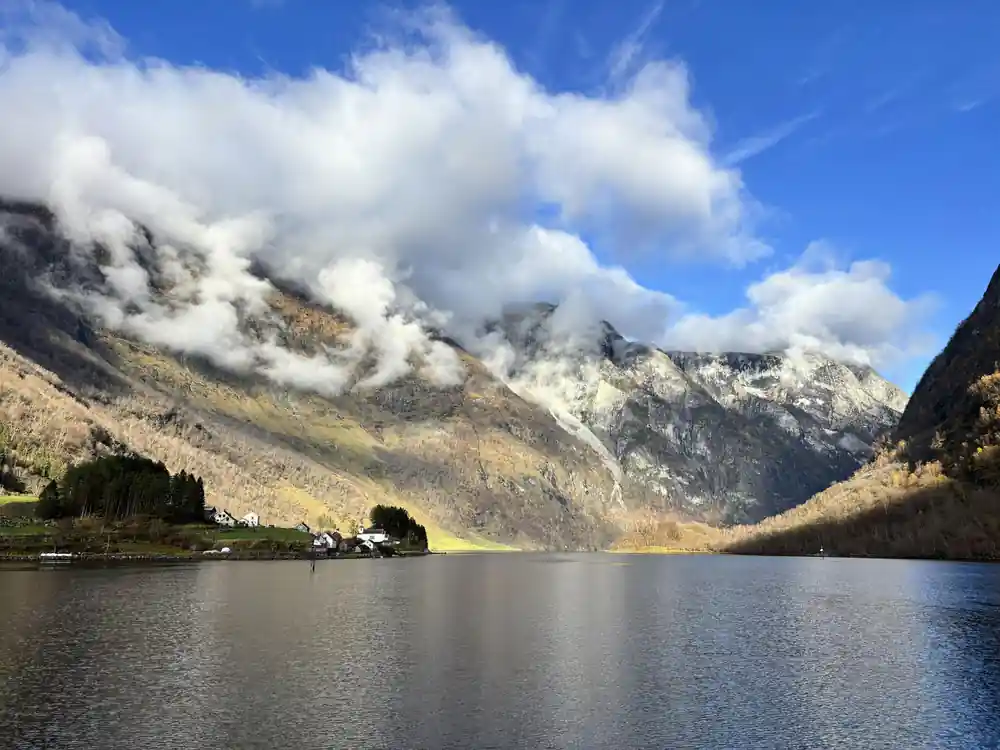
Autumn is the quiet version and it is underrated. The valley colours turn, the crowds thin, the light gets low and long, and the cloud that hangs halfway down the fjord walls is better for photographs than blue sky.
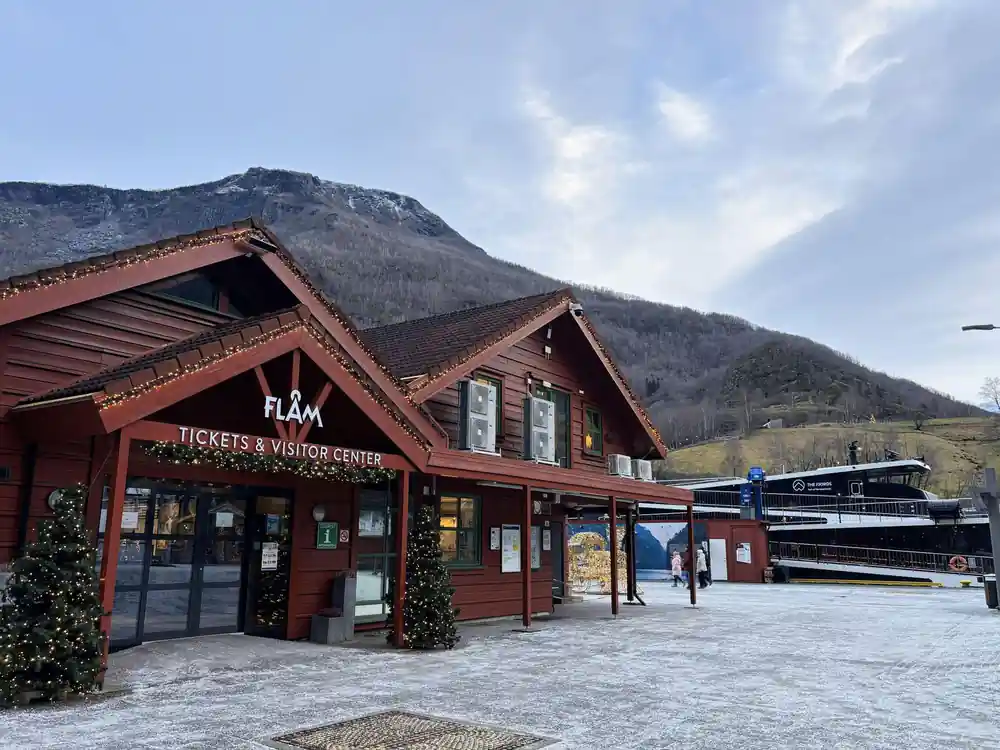
Winter narrows things considerably. Days are short at this latitude, the high roads close, and the day as described here is a summer-season product. Check what is actually running rather than assuming the same itinerary.
What the weather here does
Bergen is one of the wettest cities in Europe and makes no secret of it. Rain is the normal state rather than an event, and a day out of Bergen that only ran in sunshine would run a fraction of the time.
So the tour runs regardless, and the honest framing is that rain does not spoil this day. More water in the river means more waterfall. Cloud sitting halfway down the fjord walls is more atmospheric than a clear sky, not less. The one thing you genuinely lose is the long view from Stegastein, and even then a platform running out into cloud is a photograph in itself.
What rain does affect is comfort, and comfort is entirely within your control. The people who enjoy a wet day here are the ones dressed for it, and the people who do not are the ones who packed for the temperature reading.
Four climates, one day
This is the thing that makes clothing here harder than it looks. You are not dressing for one environment, you are dressing for four, and they alternate.
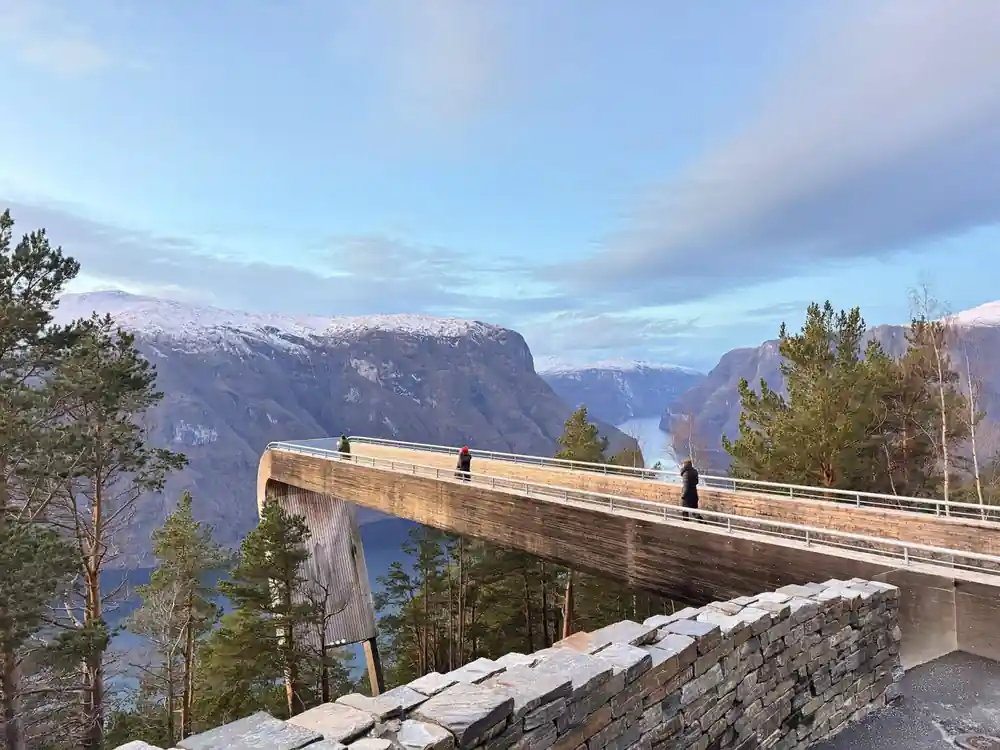
The coach is warm and you are in it for five hours. The boat deck is cold and exposed for two, and a vessel under way generates a headwind of its own that adds to whatever the fjord is already doing. Tvindefossen is wet, briefly. Stegastein is at six hundred and fifty metres, reliably colder and windier than the fjord you just left, where a mild afternoon in Flam becomes something else entirely.
One thick coat handles none of this well. You will roast in it on the coach and take it off, and then it is on a seat when you want it on a deck.
Layers you can add and shed without repacking a bag are the whole answer.
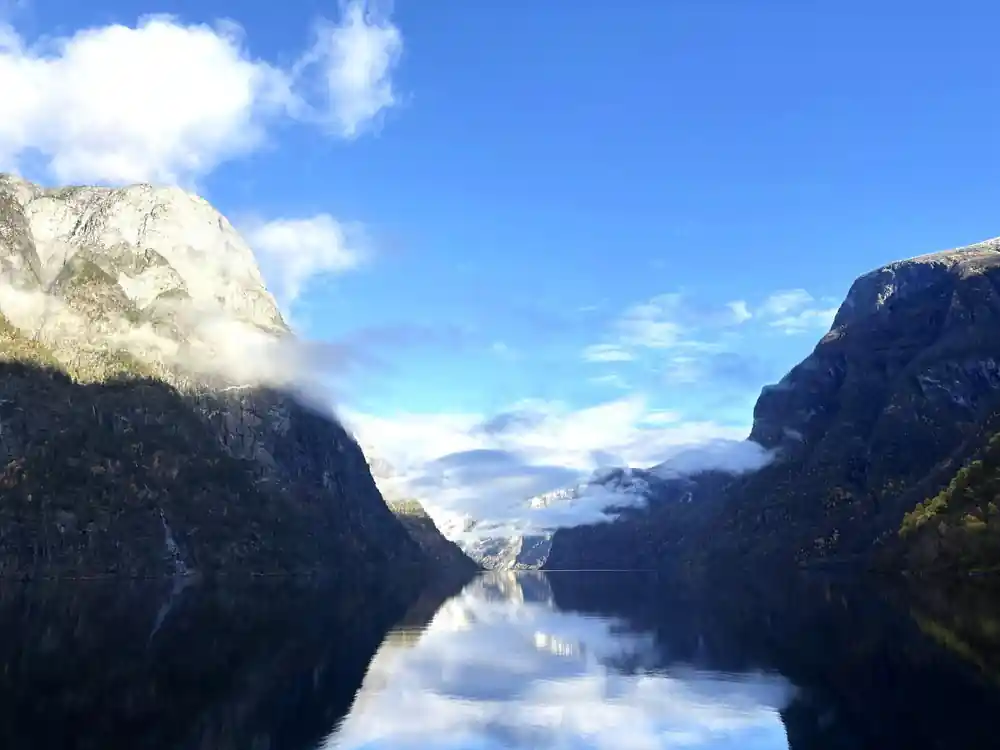
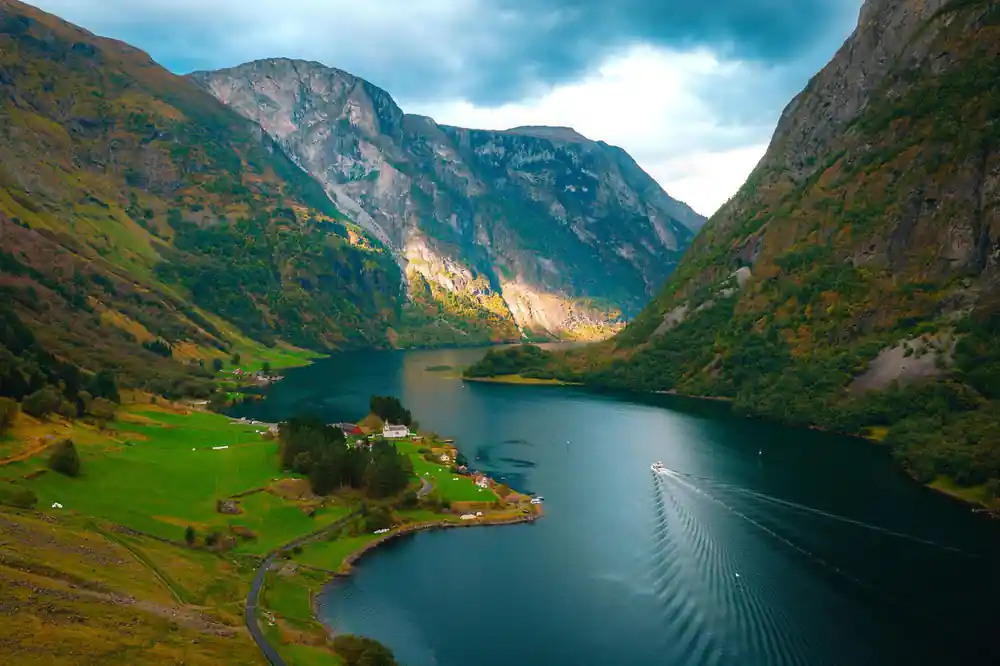
Cloud sitting halfway down a fjord wall
What to actually wear
A waterproof and windproof shell is the single most important item, and it needs a hood that stays up in wind. An umbrella is useless on a boat deck and close to useless anywhere else on this route.
Under it, a fleece or a light insulated layer, and a base layer you are comfortable in when the coach heating is on. Trousers that dry rather than trousers that soak.
A hat is worth having even in July, and one that will not blow off the deck. Gloves are not excessive if you plan to hold a camera steady for two hours in a headwind.
Footwear can be ordinary. There is no hiking on this itinerary: the only walking is a short path at the waterfall and a flat deck at the viewpoint. Comfortable shoes with some grip cover it, and the wet rock at Tvindefossen is the only place a smooth sole is a nuisance.
What else to bring
A camera with the battery charged, and a way to keep it dry. Cold flattens phone batteries faster than people expect and a twelve-hour day is a long time on one charge, so a power bank earns its place.
Something to drink and a snack of your own. Lunch and an afternoon coffee are included, but the gaps between stops are long and the operator is fine with passengers bringing their own food for the breaks.
Travel sickness tablets if you are prone to it, taken before Flam rather than at the first hairpin on the climb to Stegastein. The road up is switchbacks the whole way.
Sunscreen, which sounds absurd for Norway and is not. Reflection off water at altitude catches people out on the clear days, and the clear days are the ones you were hoping for.
Daylight, and the shape of the day
At this latitude the year is lopsided, and it decides how much of a twelve-hour day you can actually see.
In midsummer there is light at both ends and more of it than the itinerary needs, so a 07:45 departure and an evening return are both fully lit. Nothing is missed to darkness.
In the shoulder seasons the ends of the day start to go. The morning run out of Bergen and the last stretch home can be in low light or dark, which takes some of the road scenery away but none of the fjord, the waterfall or the viewpoint, all of which happen in the middle hours.
In winter the balance tips far enough that the day as described stops making sense, which is why the season is what it is.
It runs in the rain, and the rain suits it
from US$310Reserve now & pay later