









Why the day is twelve hours long
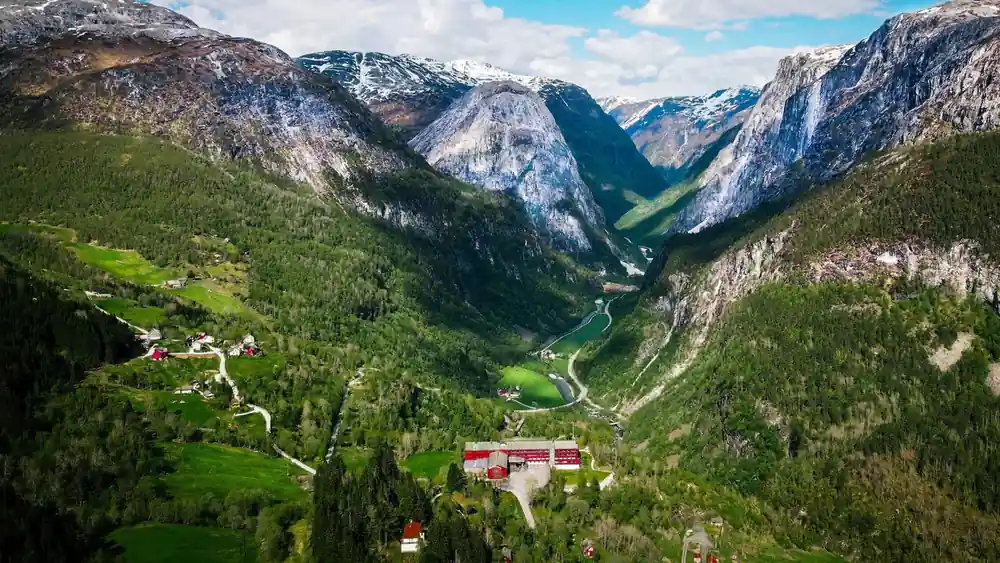
Bergen is on the coast. The fjord this tour exists for is a long way inland, on the far side of a mountain range, and there is no fast way through it.
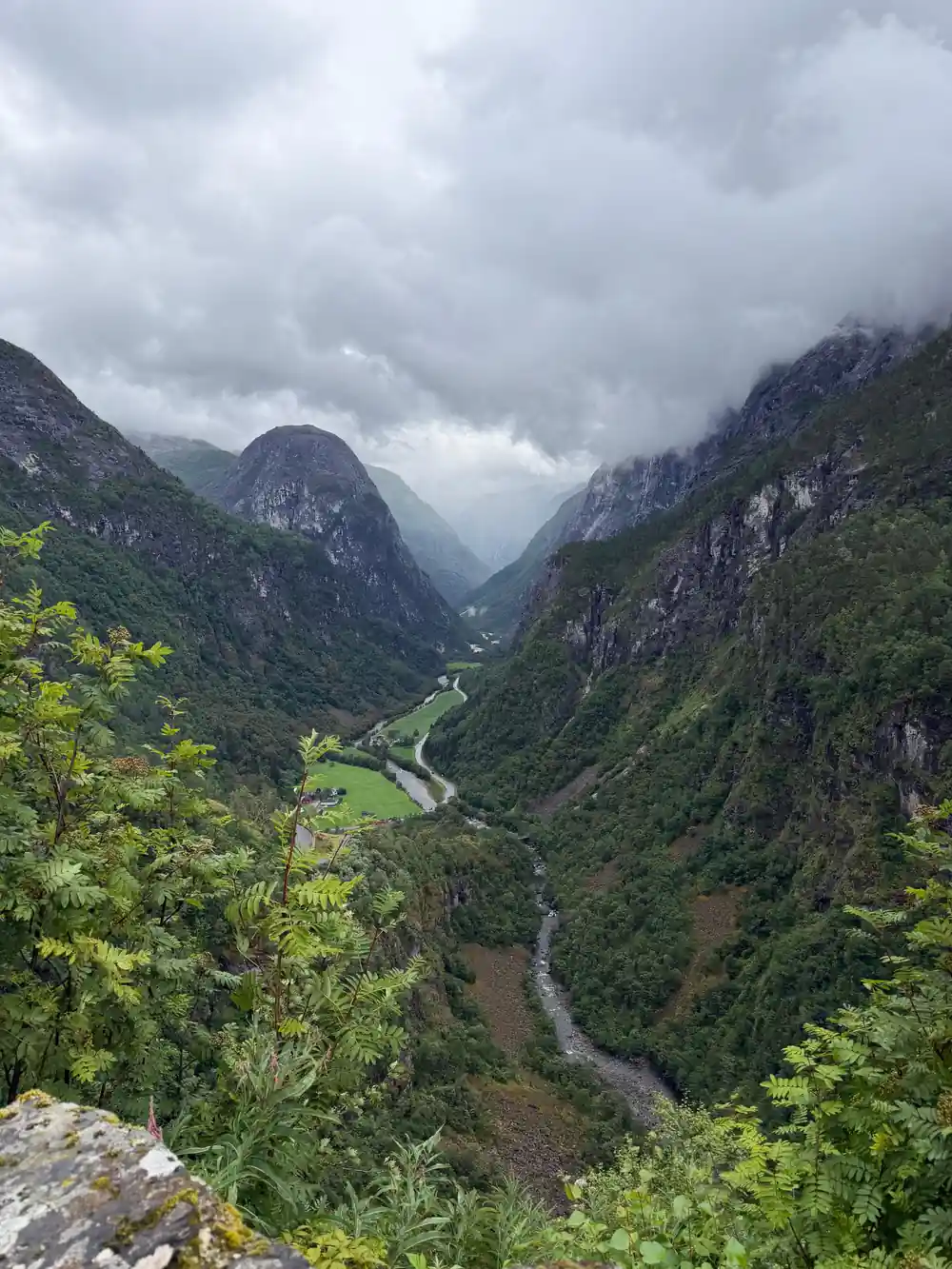
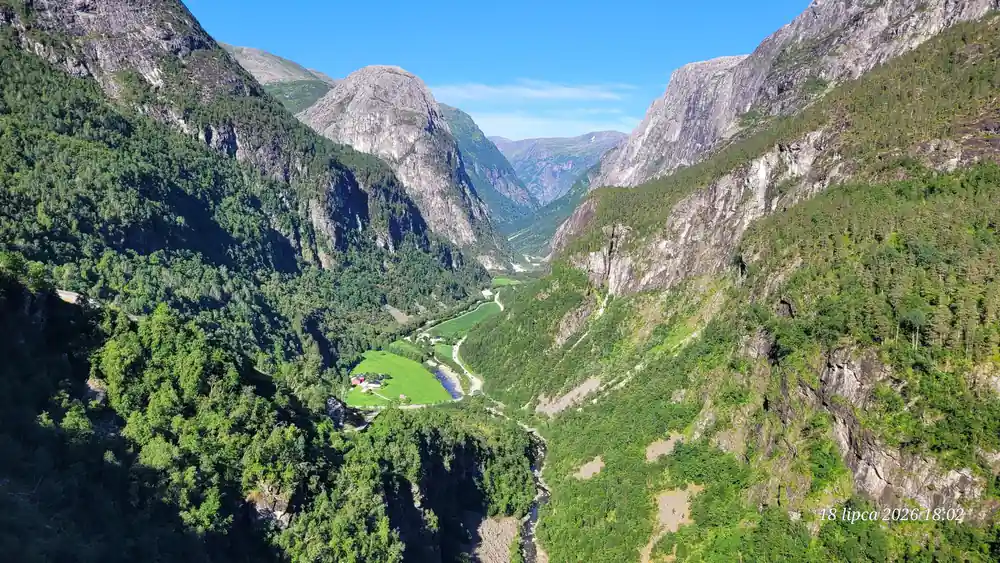
The coach runs out along the Osterfjord, over the high ground past Voss, and down a valley to Gudvangen at the head of the Nærøyfjord. That is around three hours. The boat then takes two hours to cover the fjord itself to Flåm. Then there is the climb to the Stegastein viewpoint above the Aurlandsfjord, and finally the run back to Bergen by a different road.
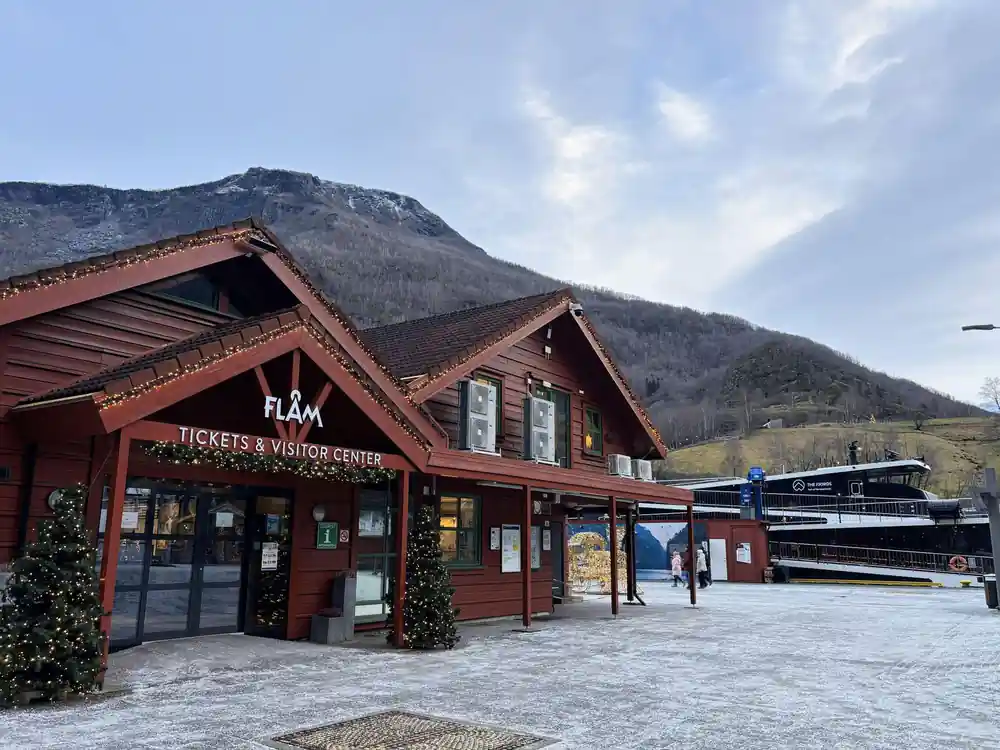
Add a waterfall stop, a lunch and forty minutes in Flåm and the day is what it is. Nobody sells a shorter version of this itinerary because the geography does not allow one.
The one thing to build into your own planning is that western Norwegian roads are narrow, they run beside water, and they are shared with everyone else trying to reach the same fjord. The operator says plainly that occasional delays happen, and anyone with an evening commitment in Bergen should treat the return time as an estimate rather than a promise.
The two hours that the day is built around
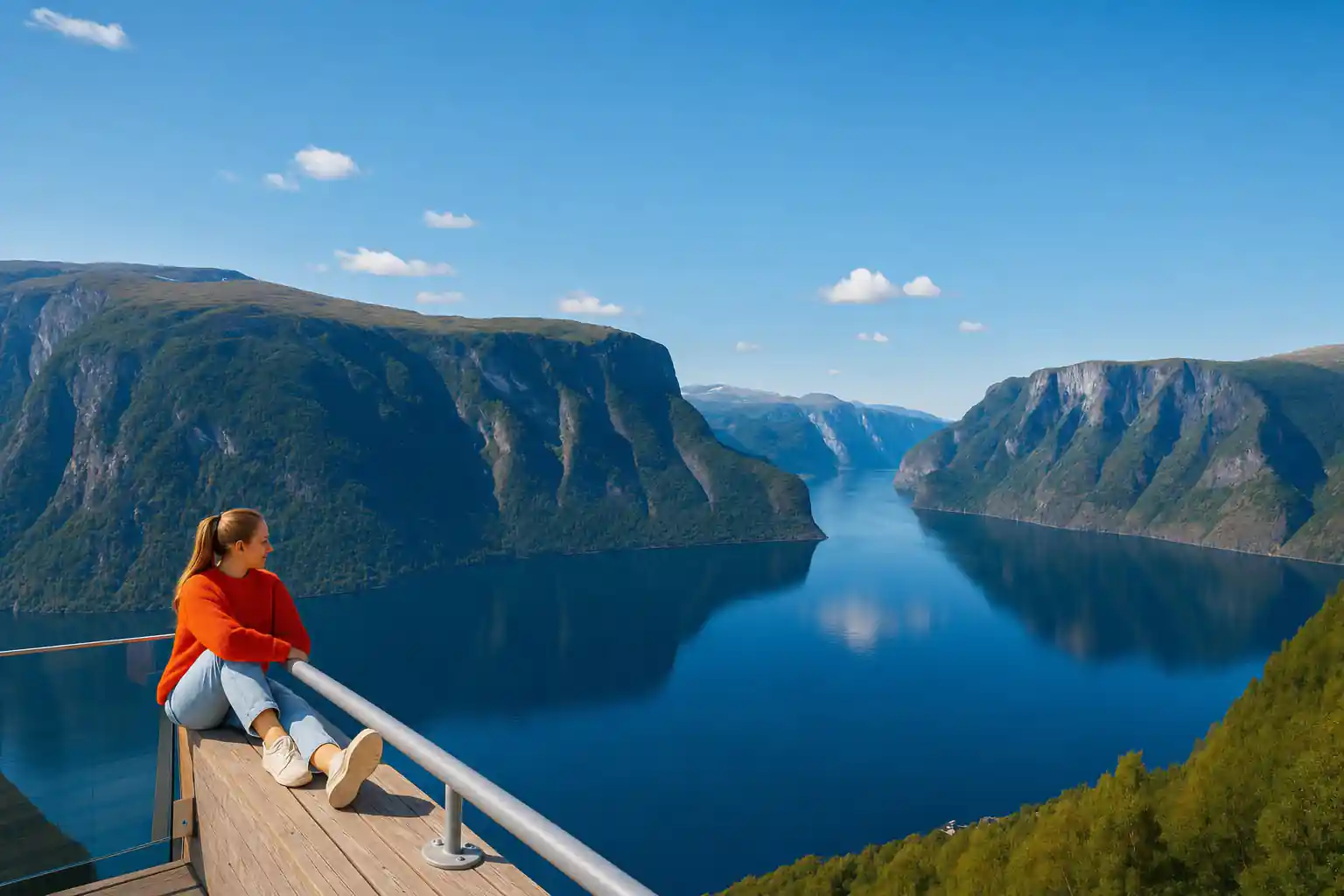
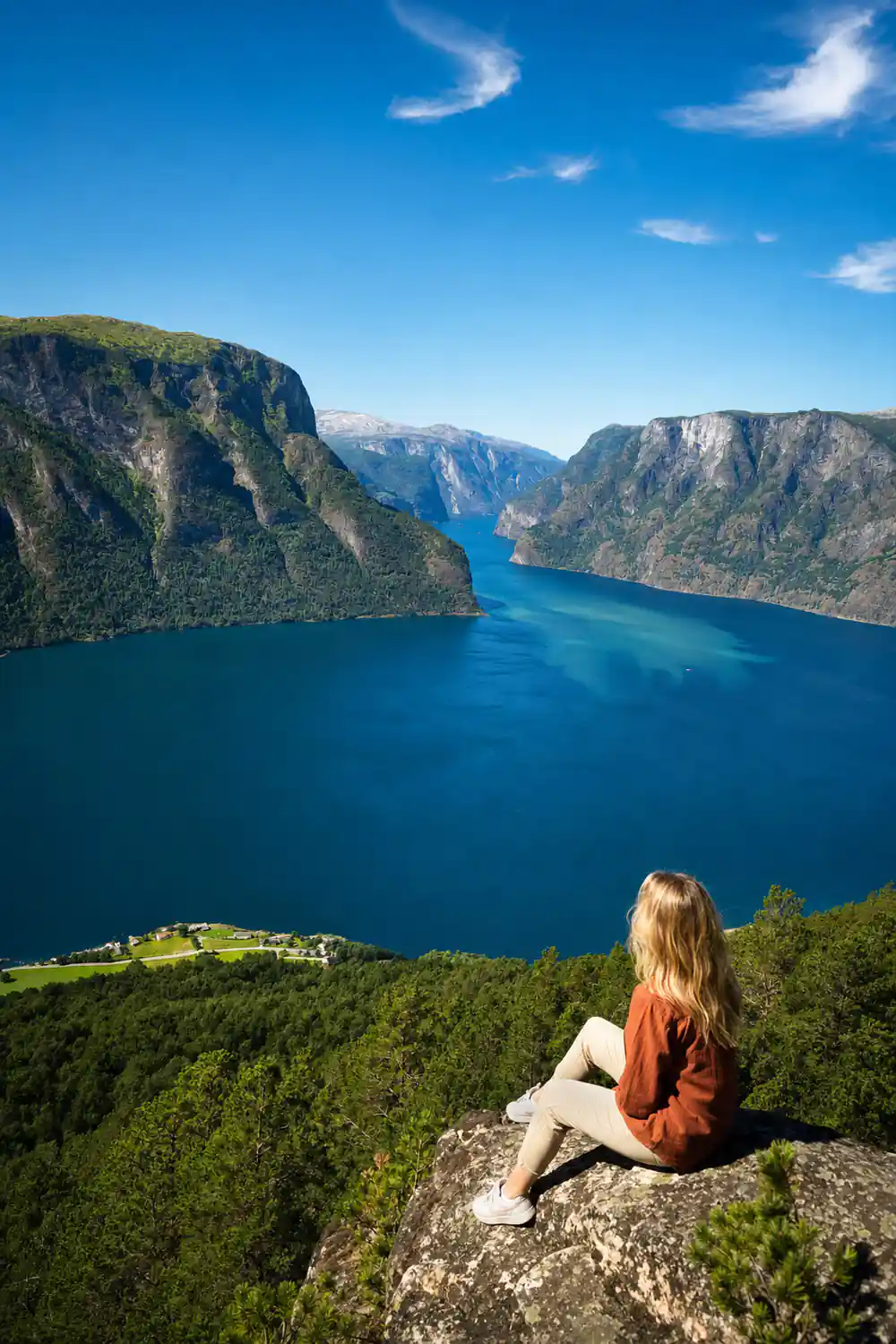
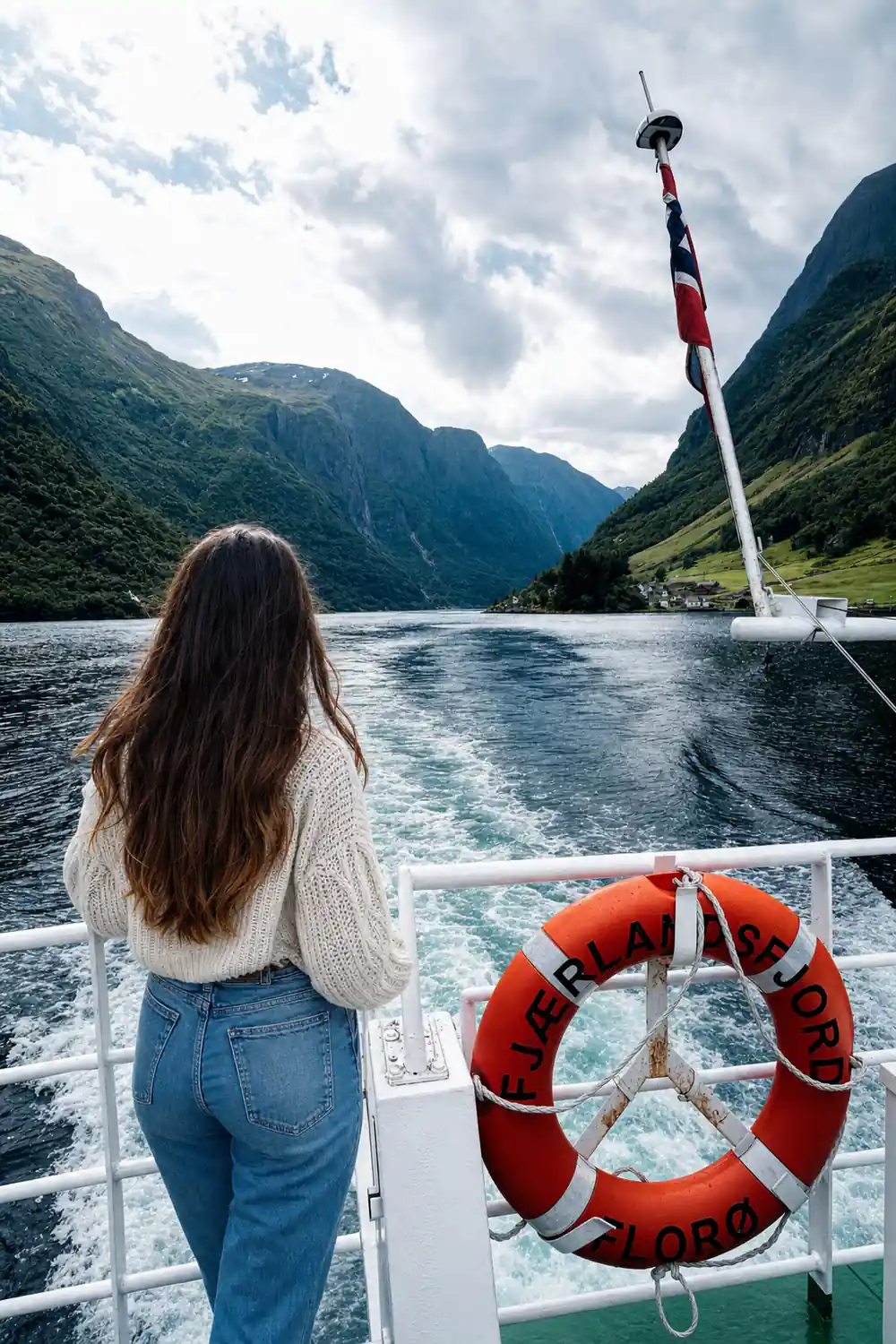
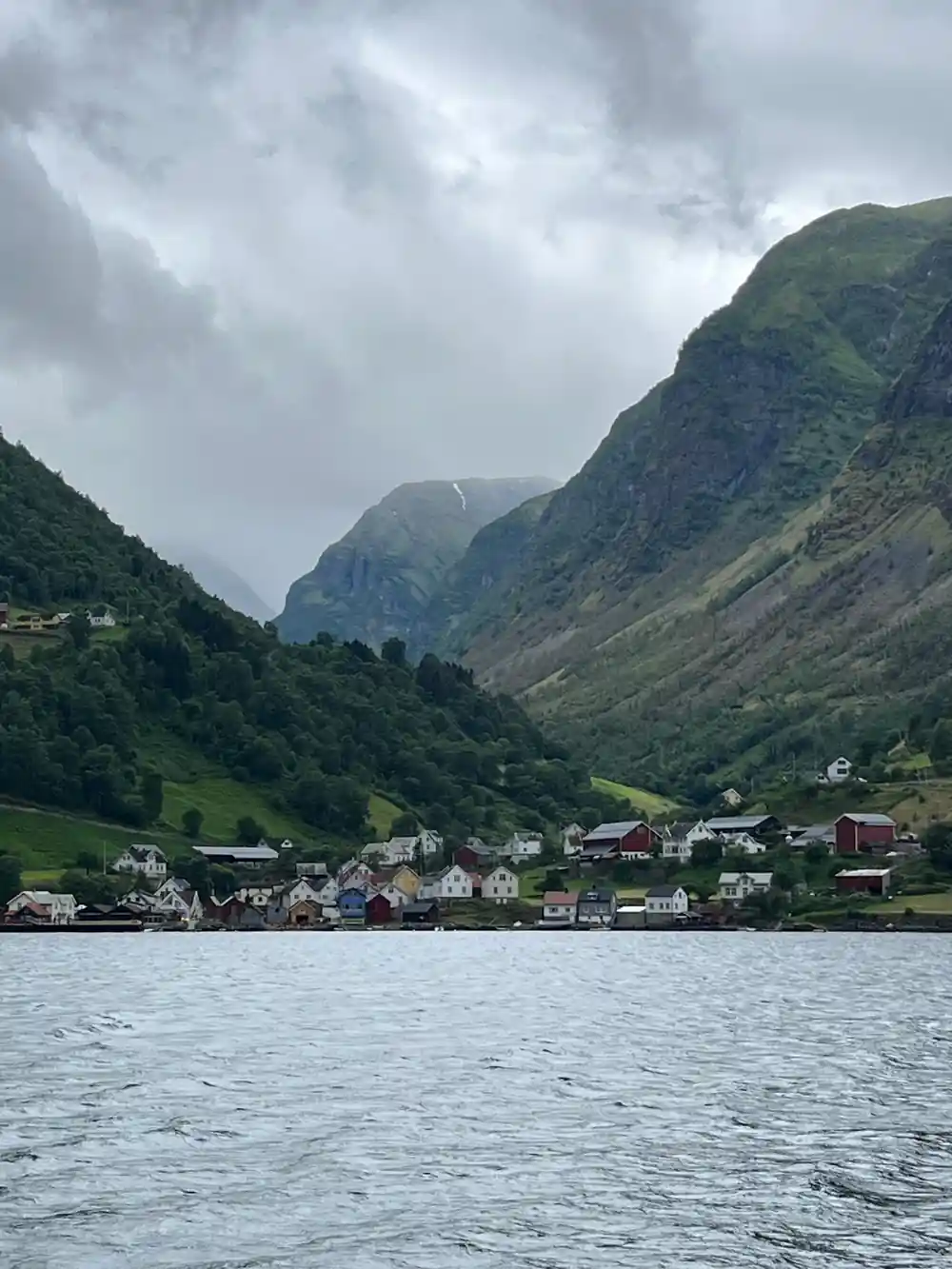
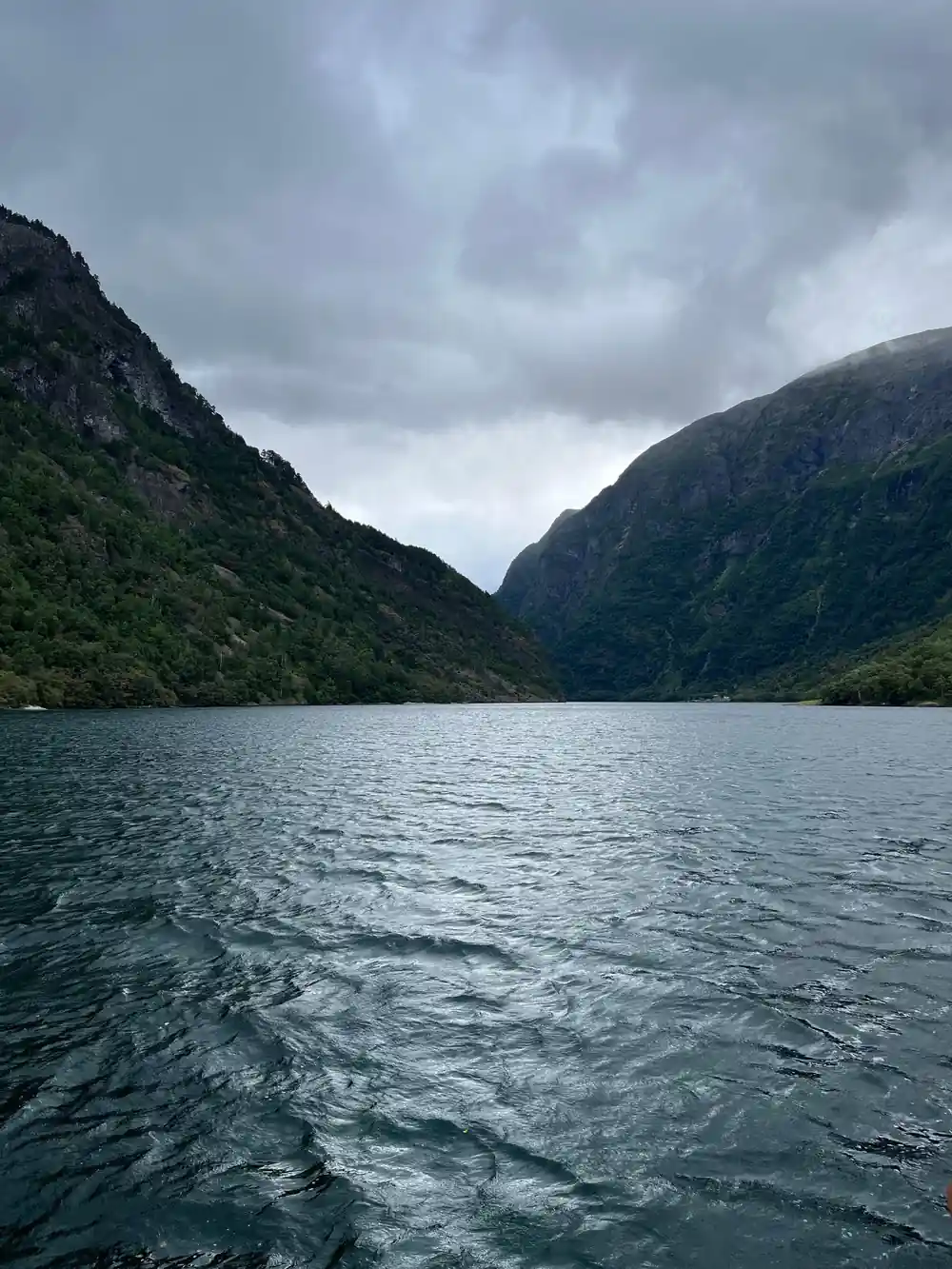
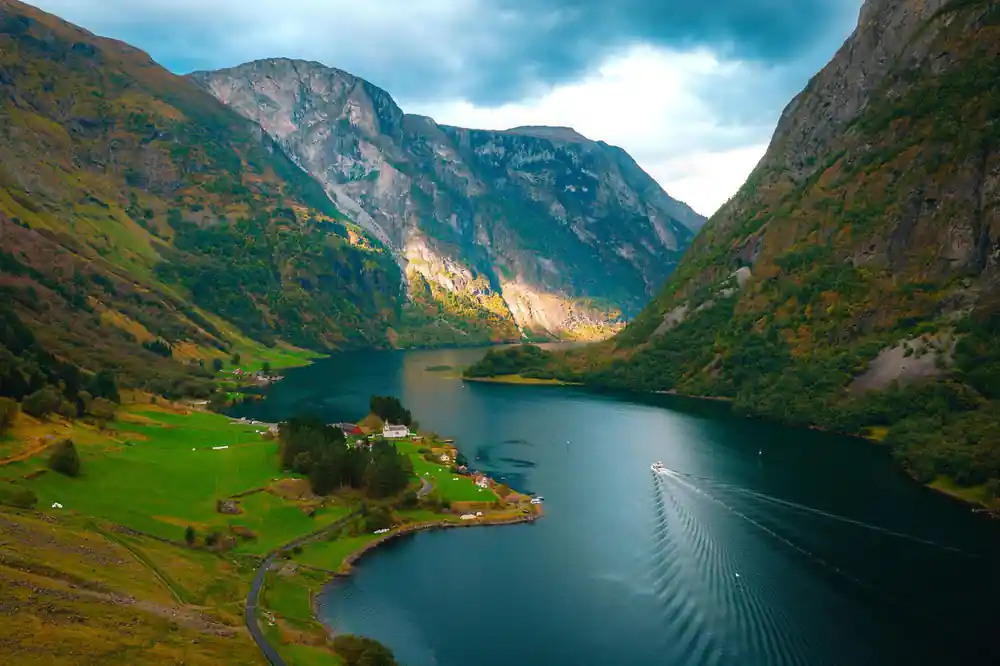
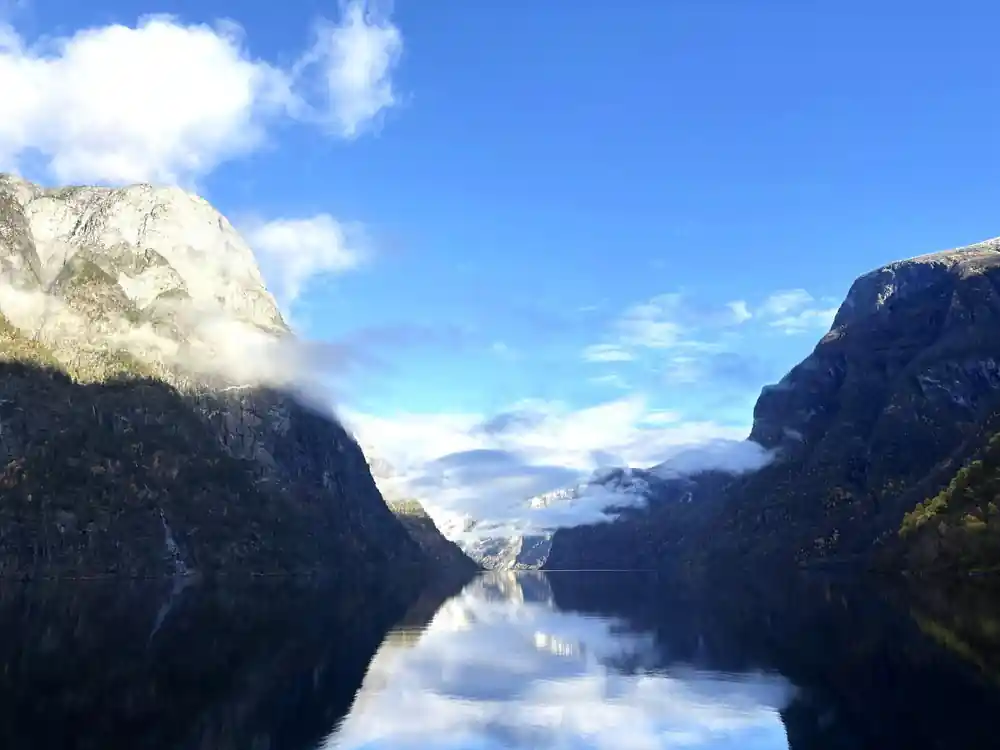
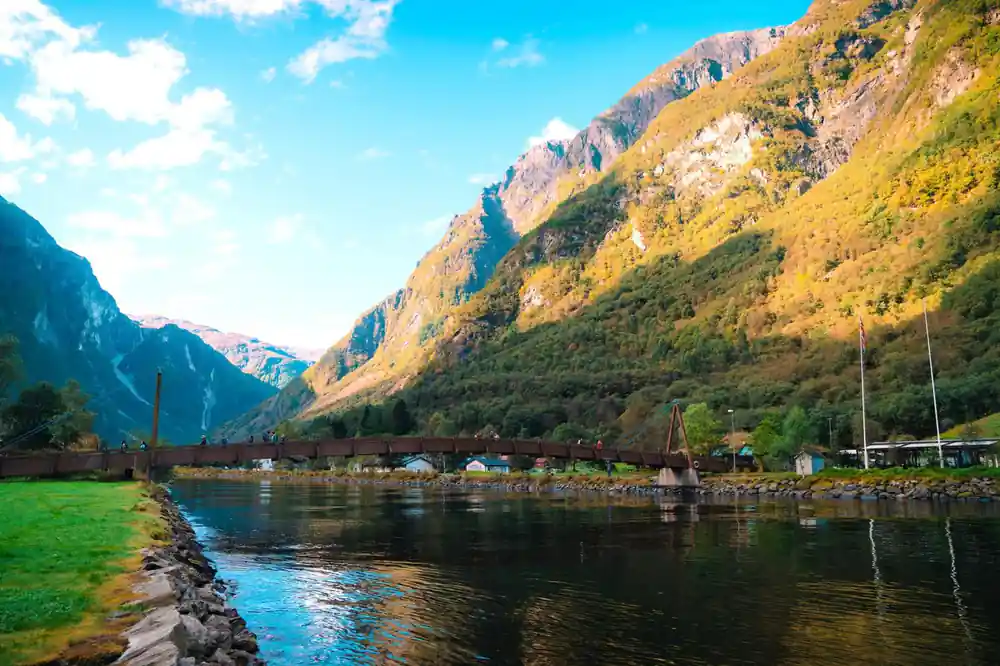
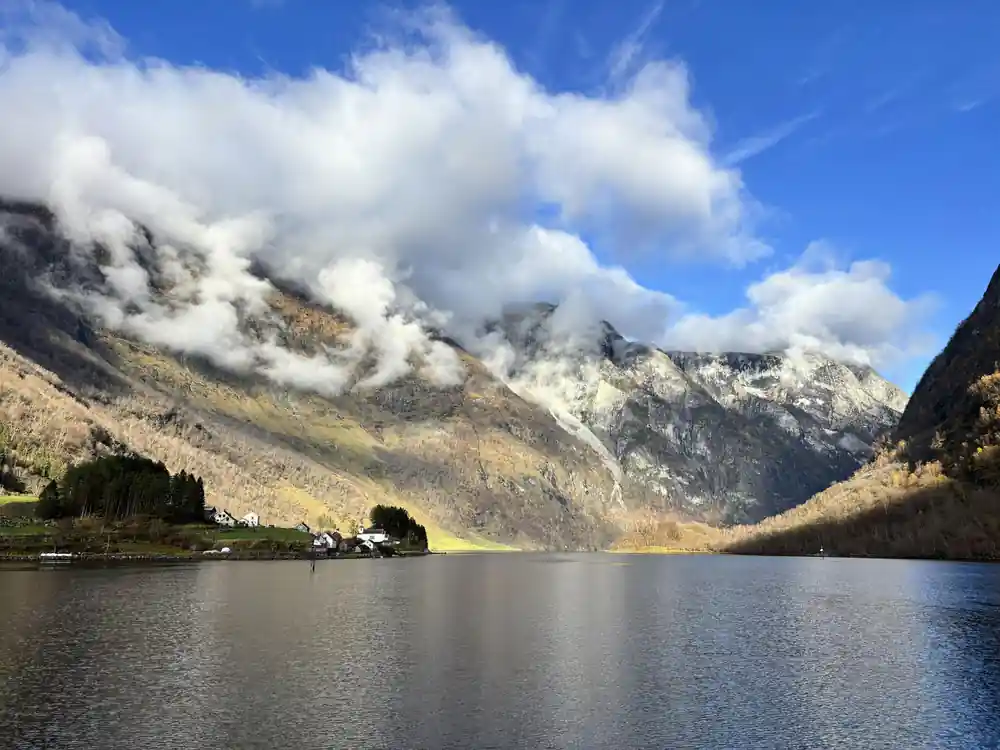
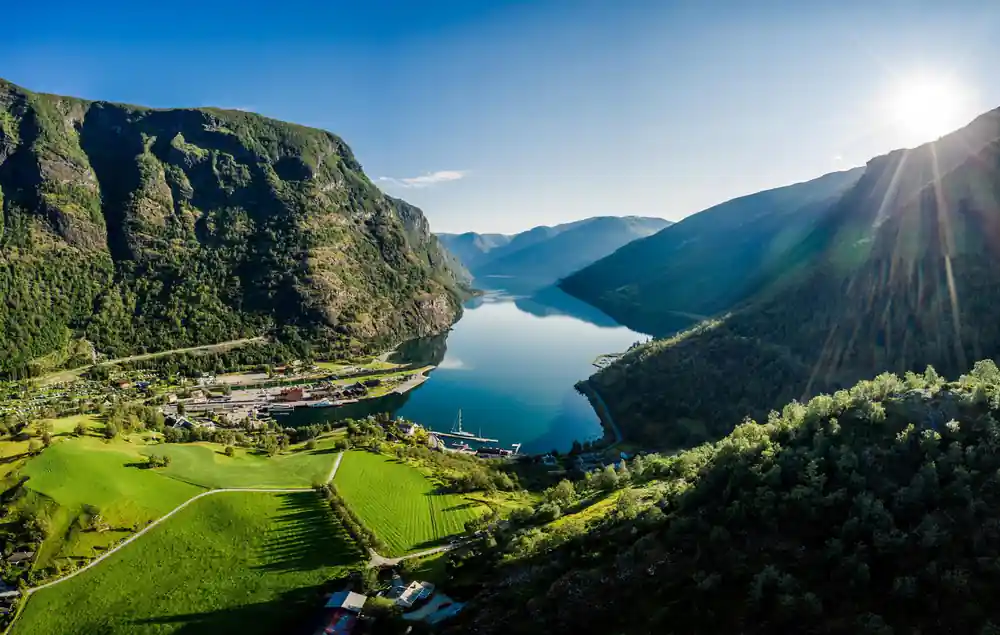
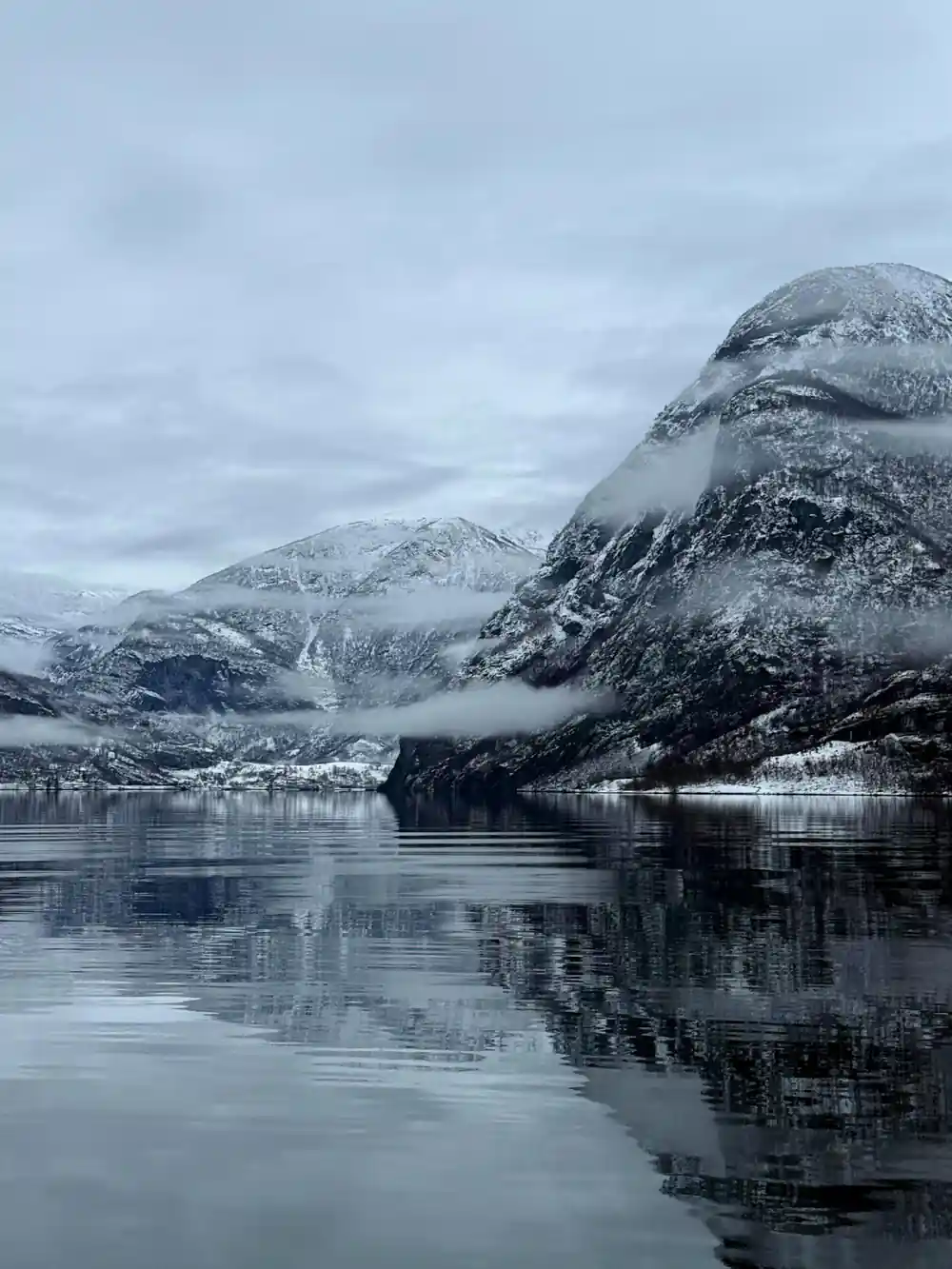
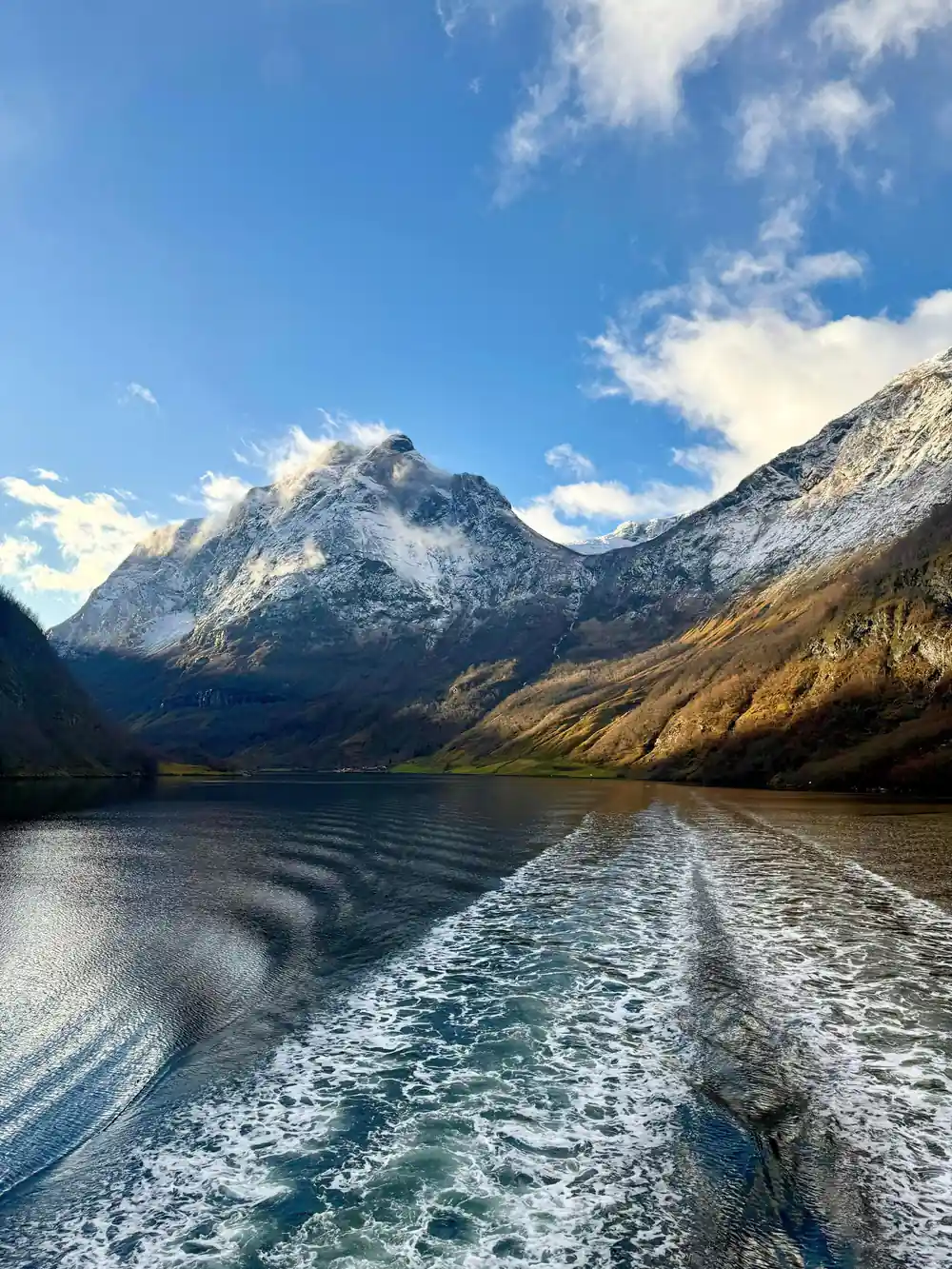
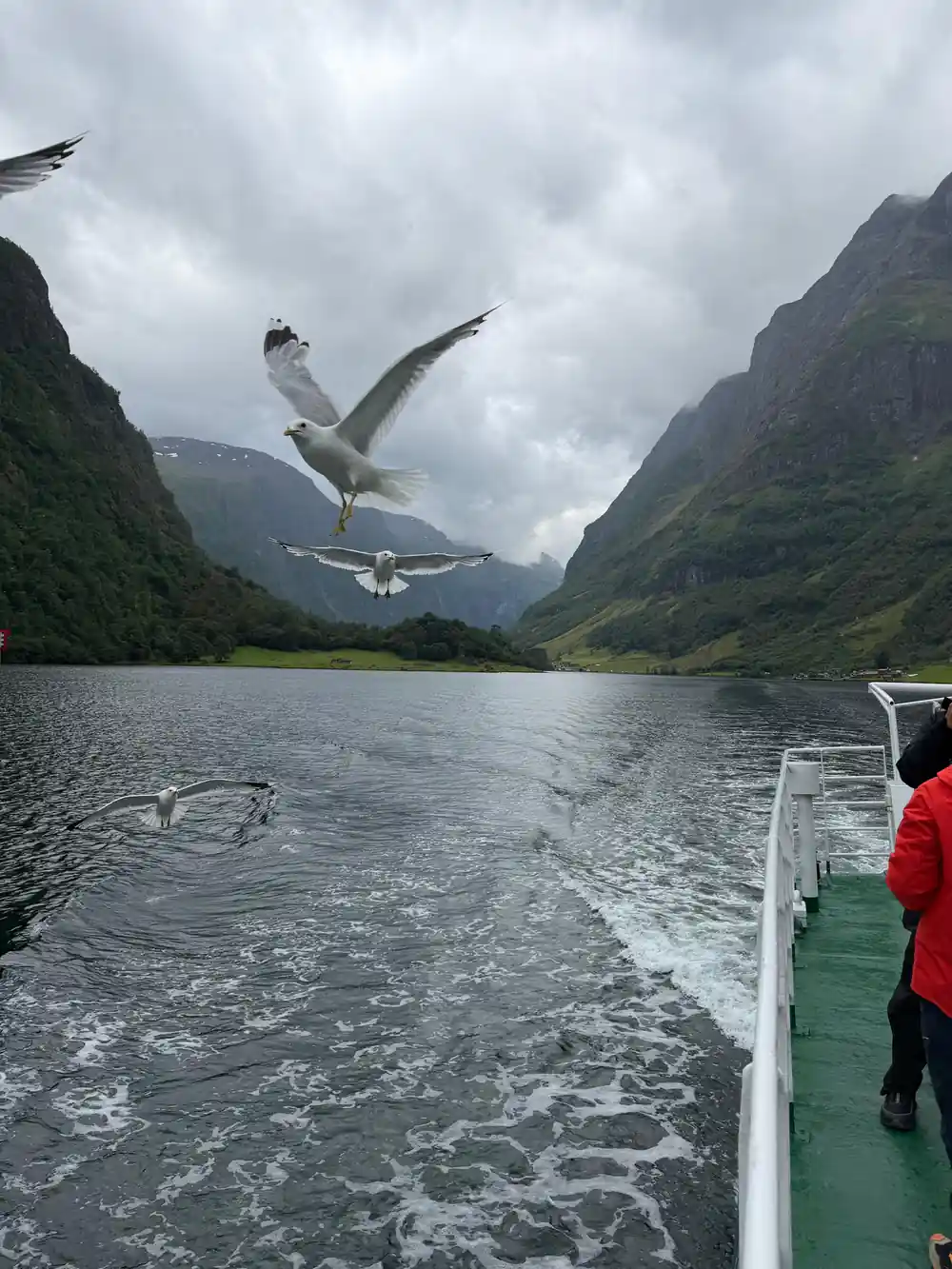
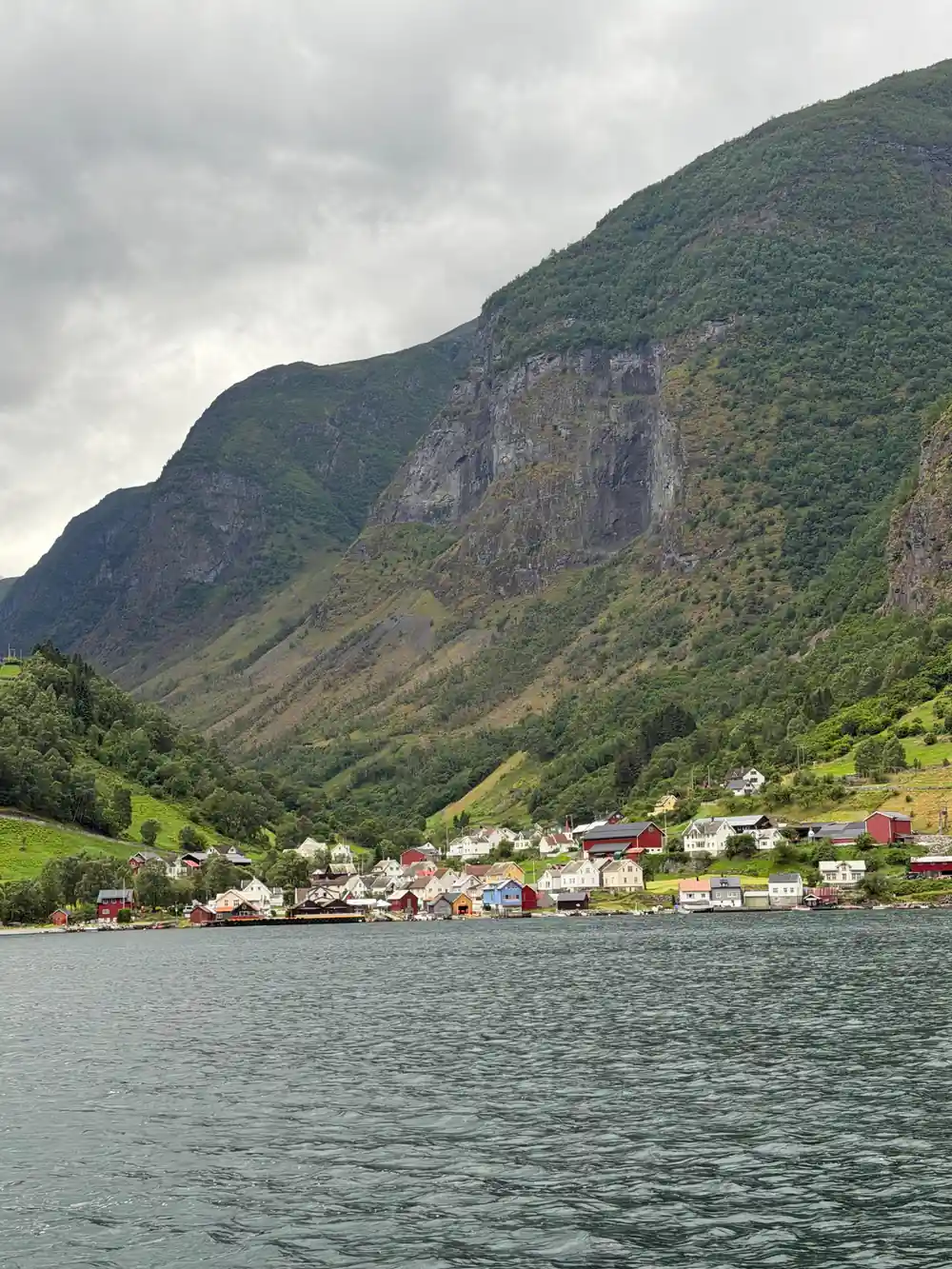
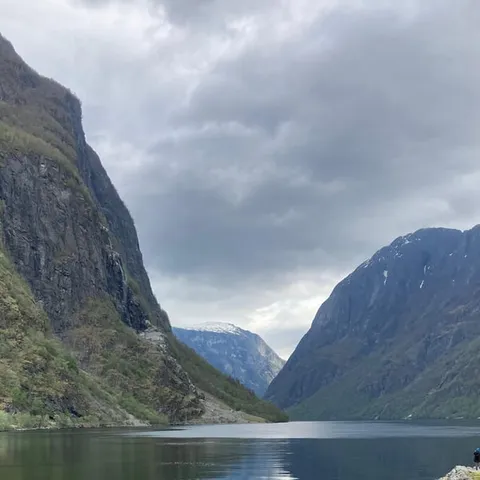
The Nærøyfjord is the narrow one. Vertical rock on both sides, water in between, and stretches where the gap between the walls is measured in hundreds of metres rather than kilometres.
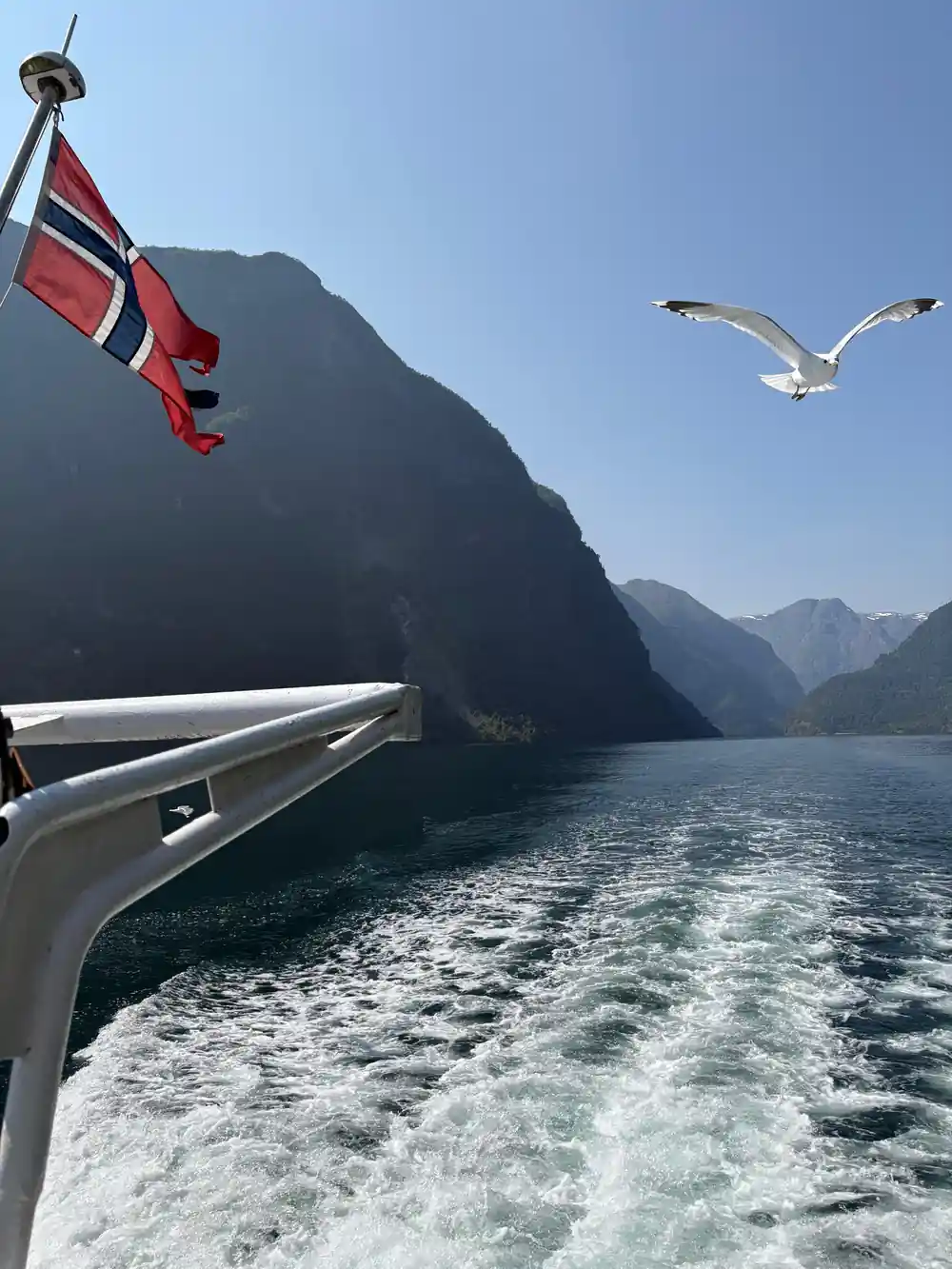
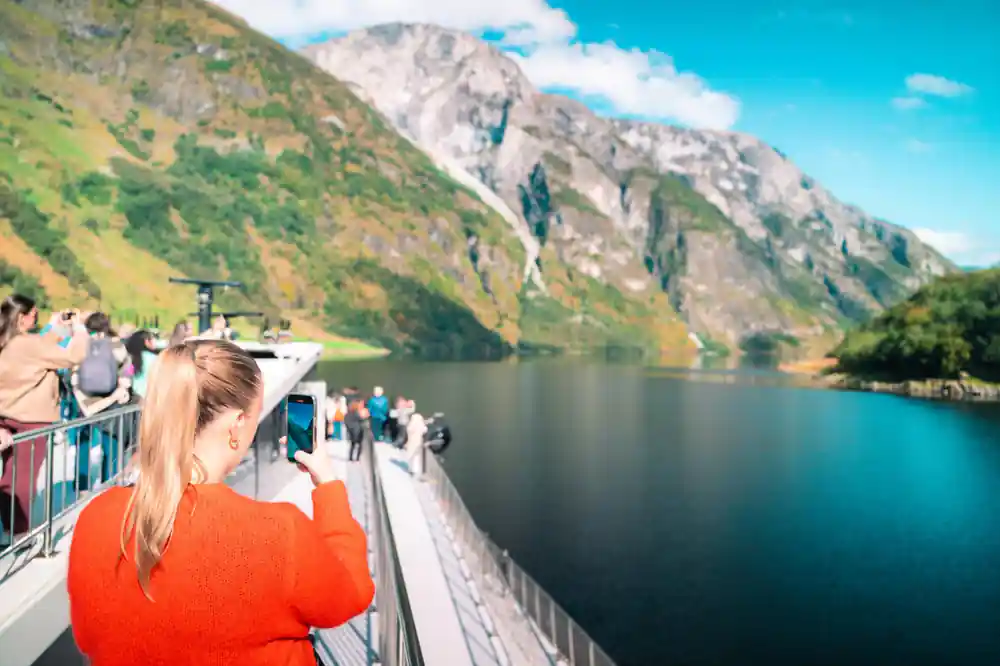
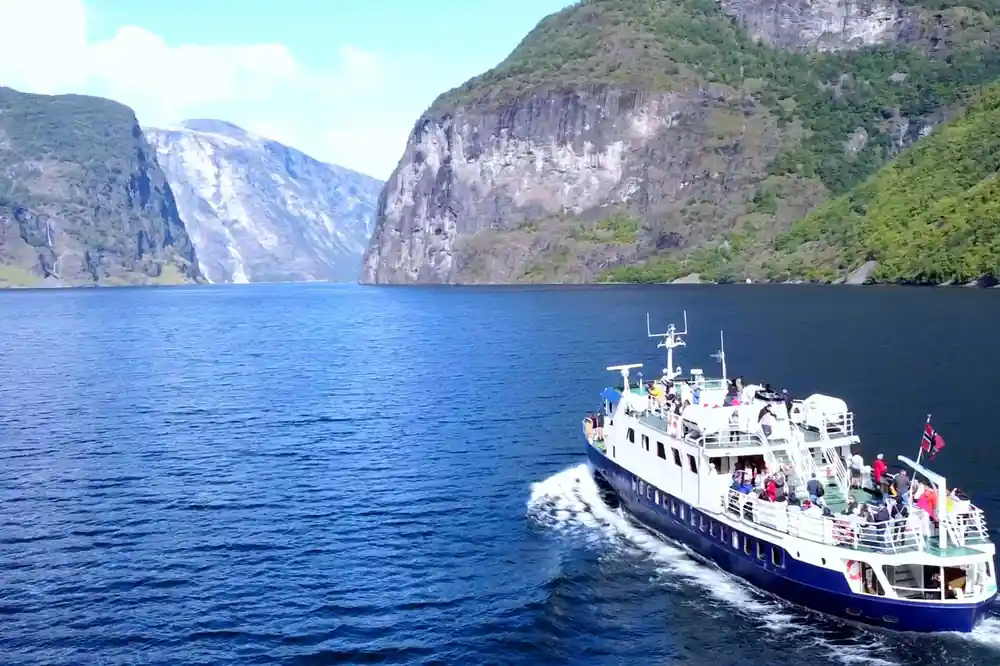
You cross it on a modern low-emission vessel with an open deck and a heated interior. Electric propulsion is not a marketing detail here: with the engines quiet, what you hear on deck is water coming off the walls, which in this fjord is more or less constant.
Two hours sounds long for a boat ride and does not feel it. The fjord changes character every few minutes, the light does whatever the weather allows, and the far end of it delivers you to Flåm rather than back where you started.
Stegastein, which is not a lay-by
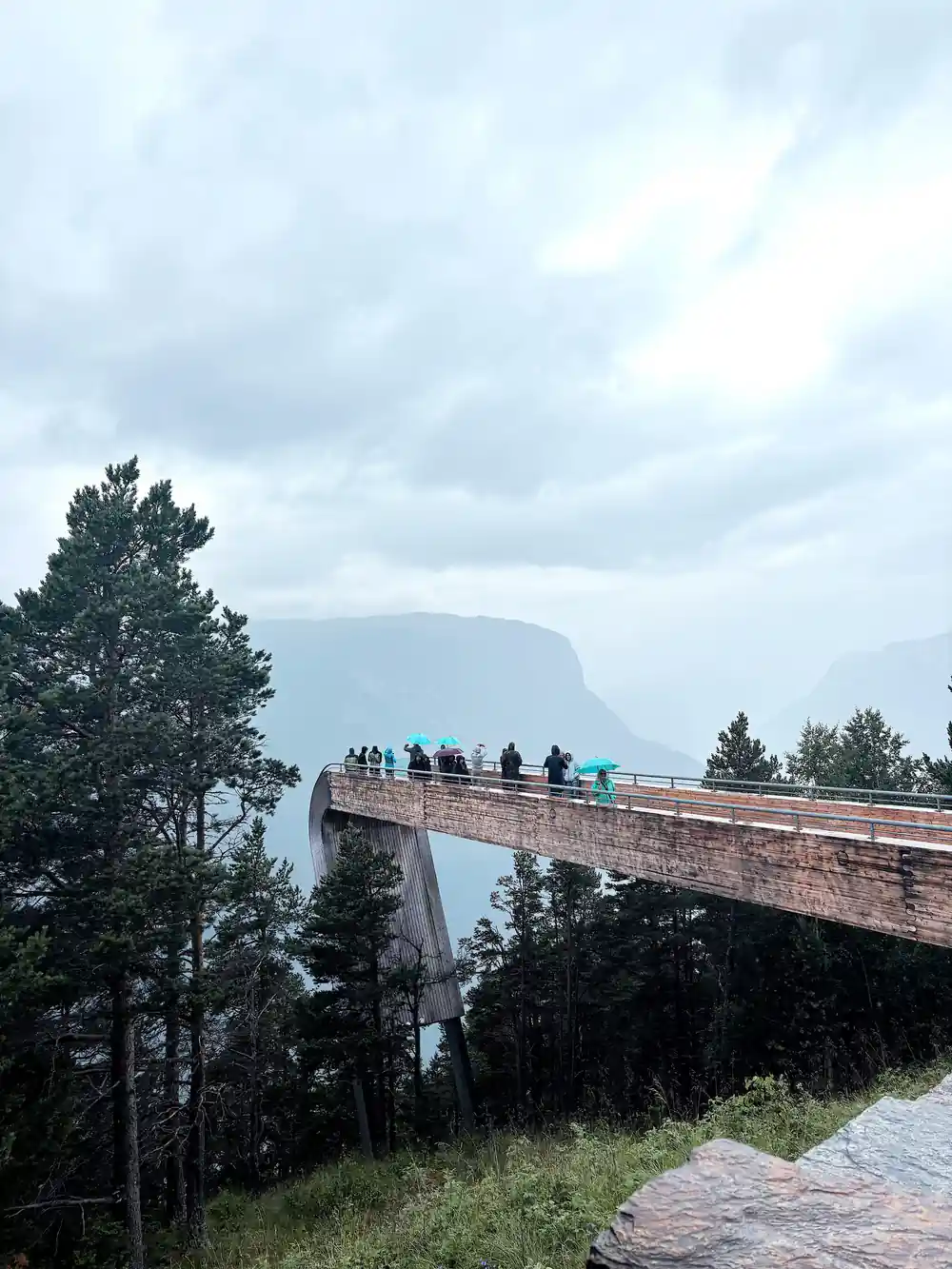
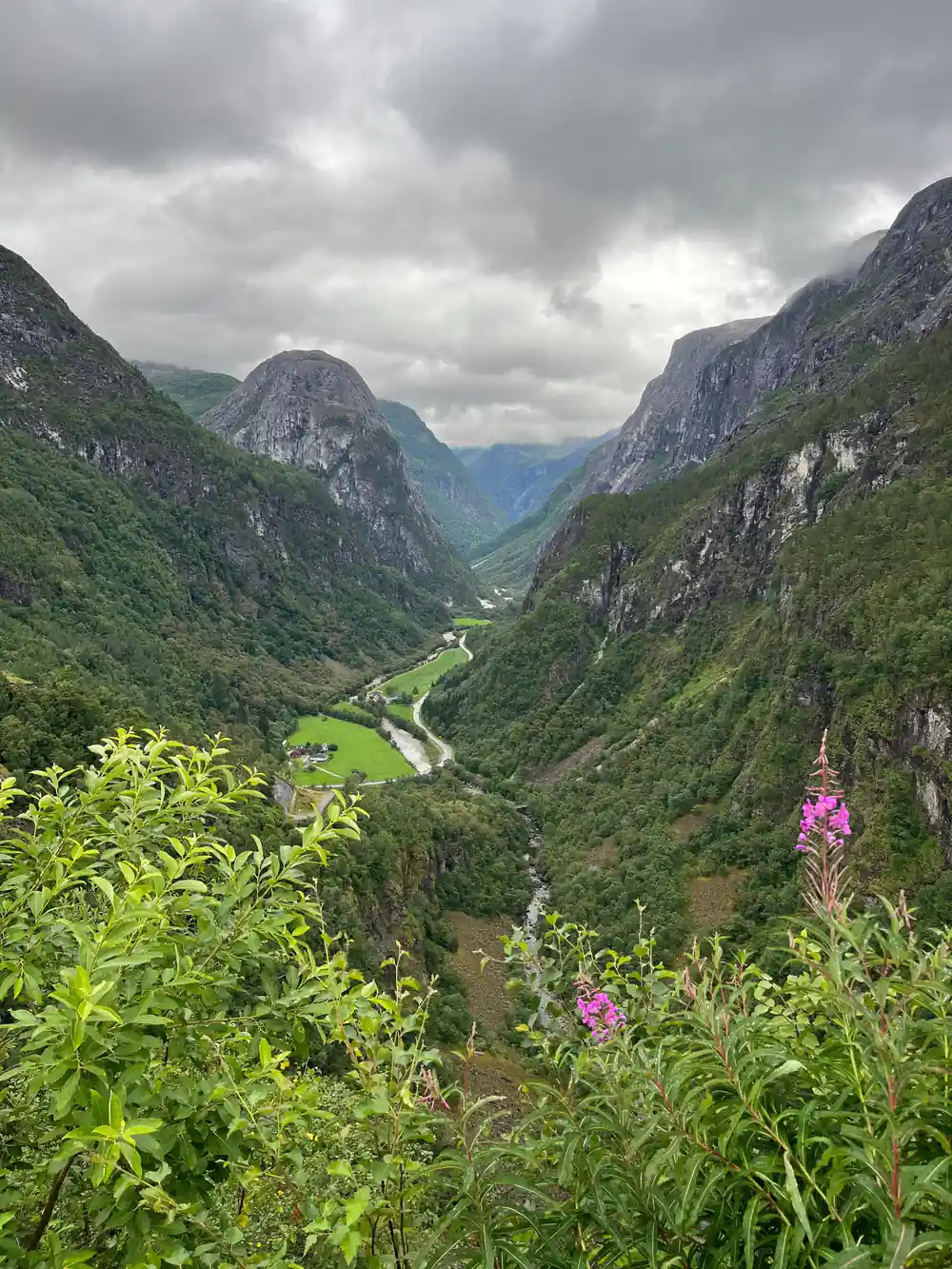
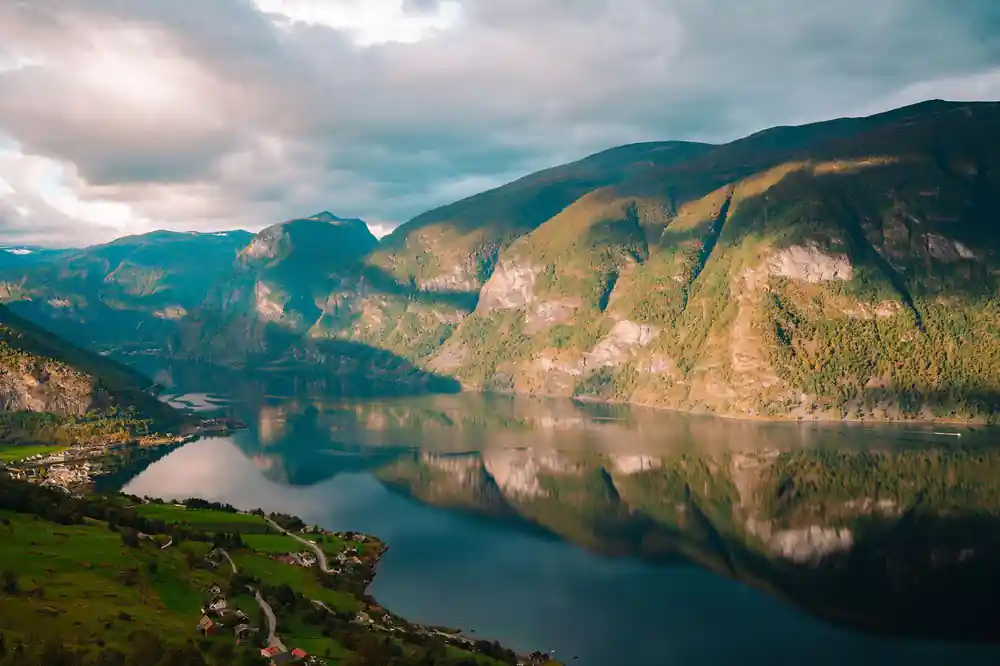
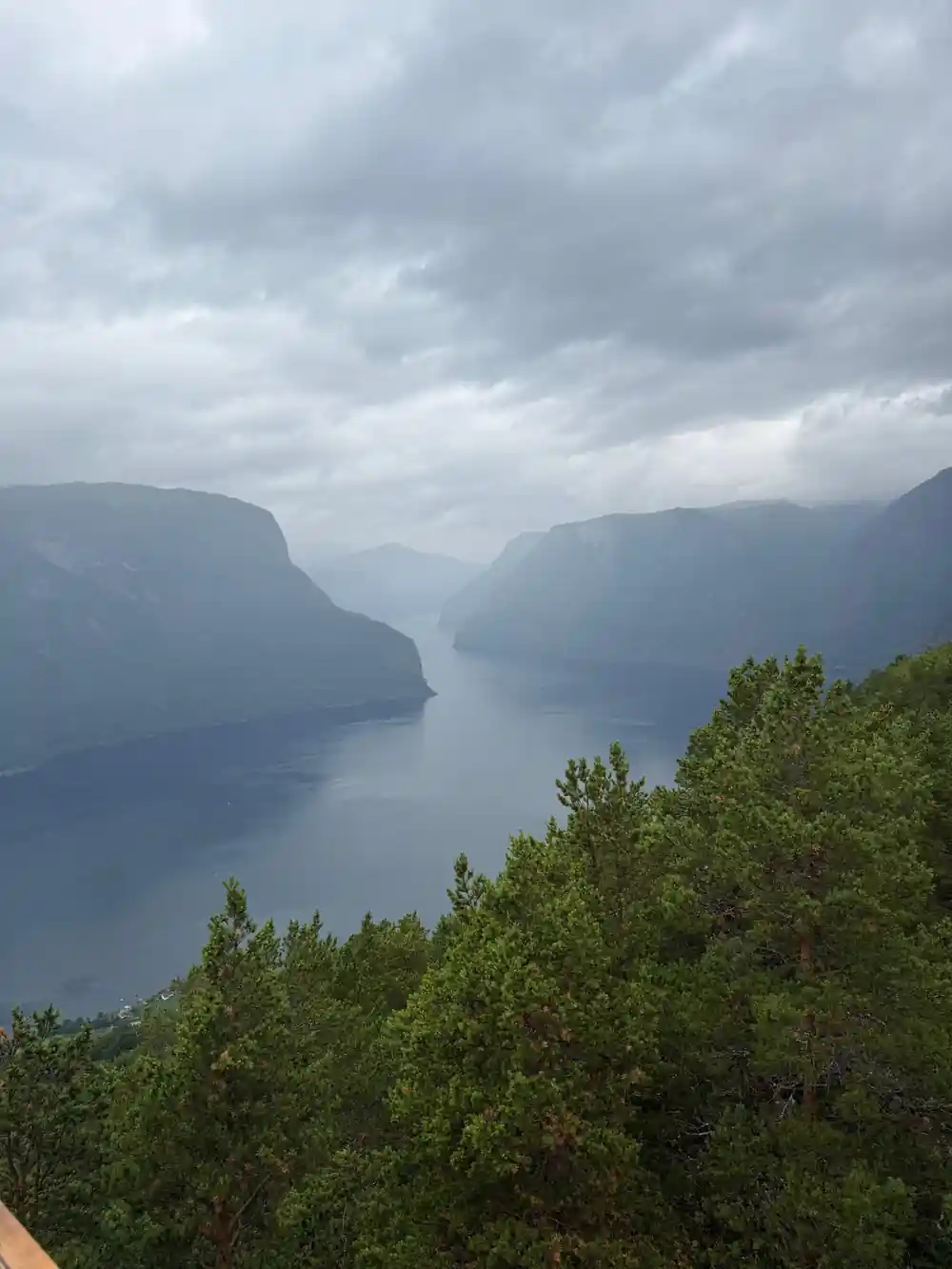
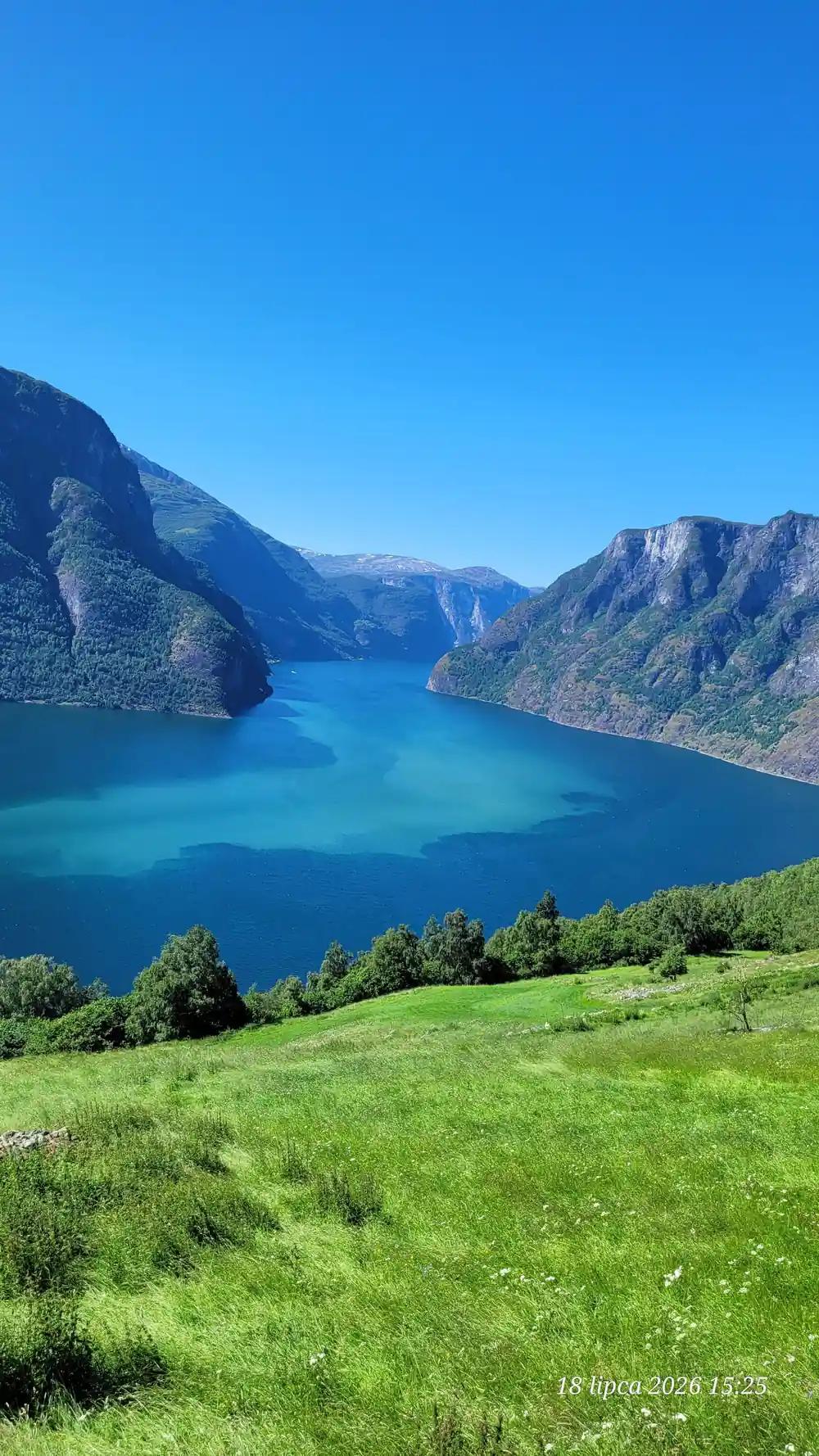
After Flåm the coach climbs the mountain road above the Aurlandsfjord, a series of tight bends that gains six hundred metres in a distance that looks unreasonable on a map.
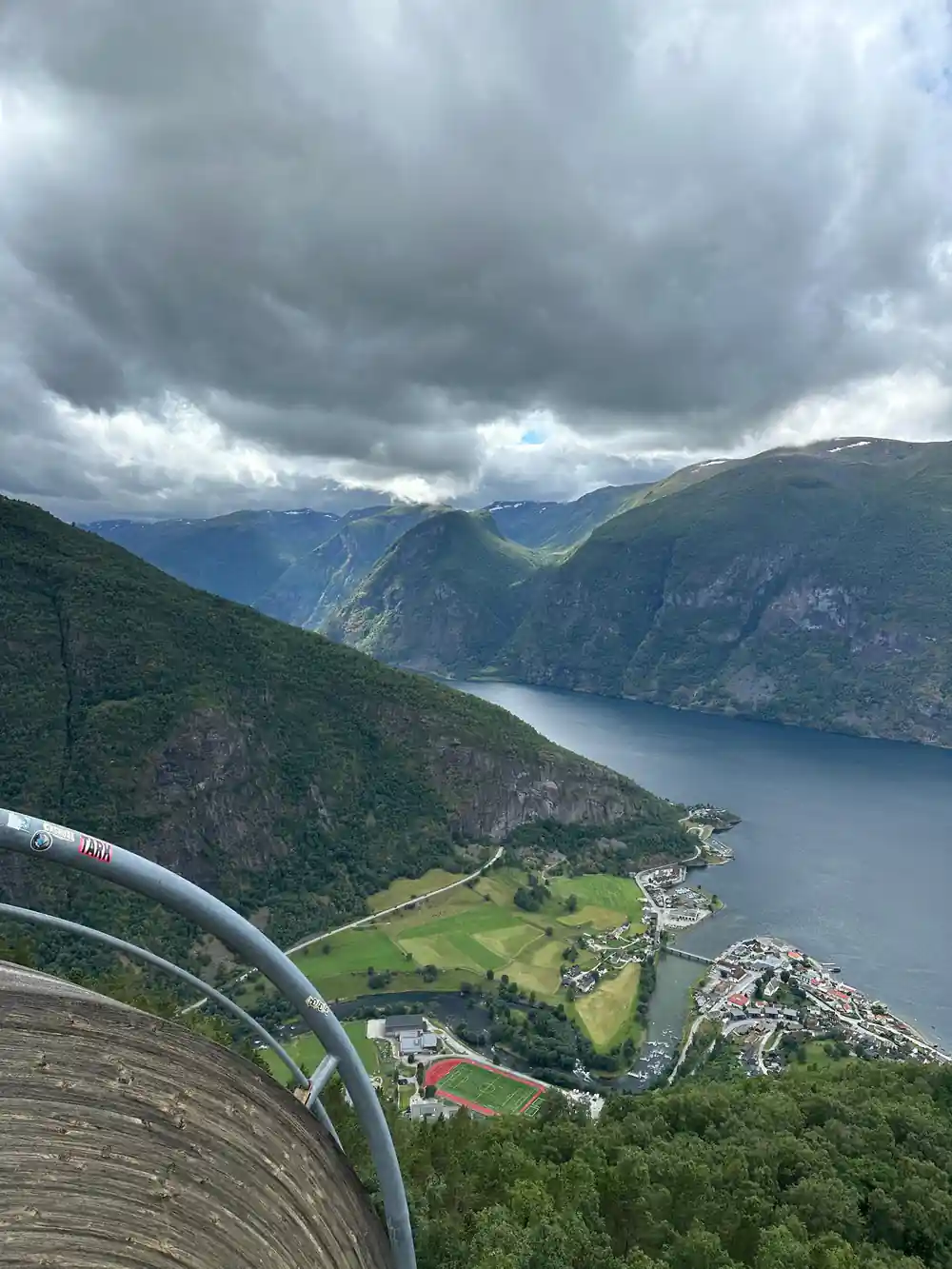
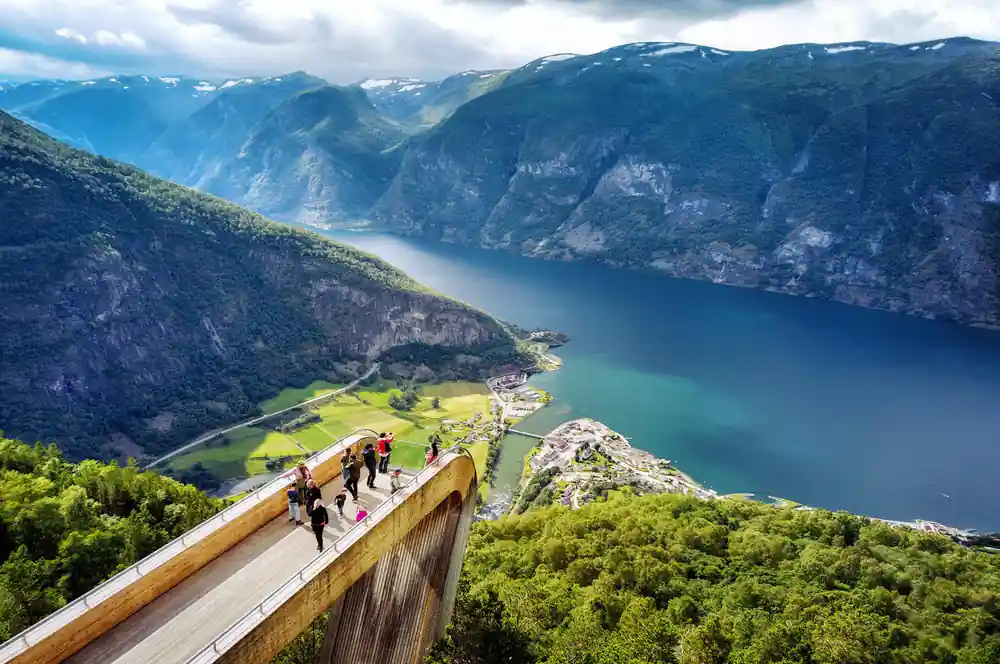
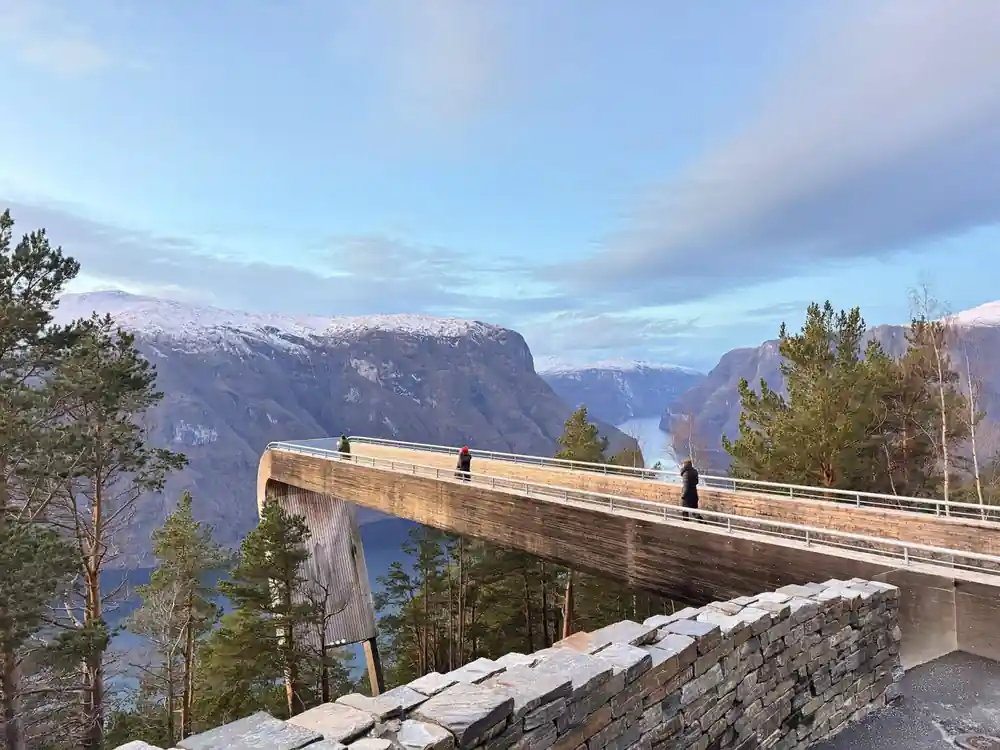
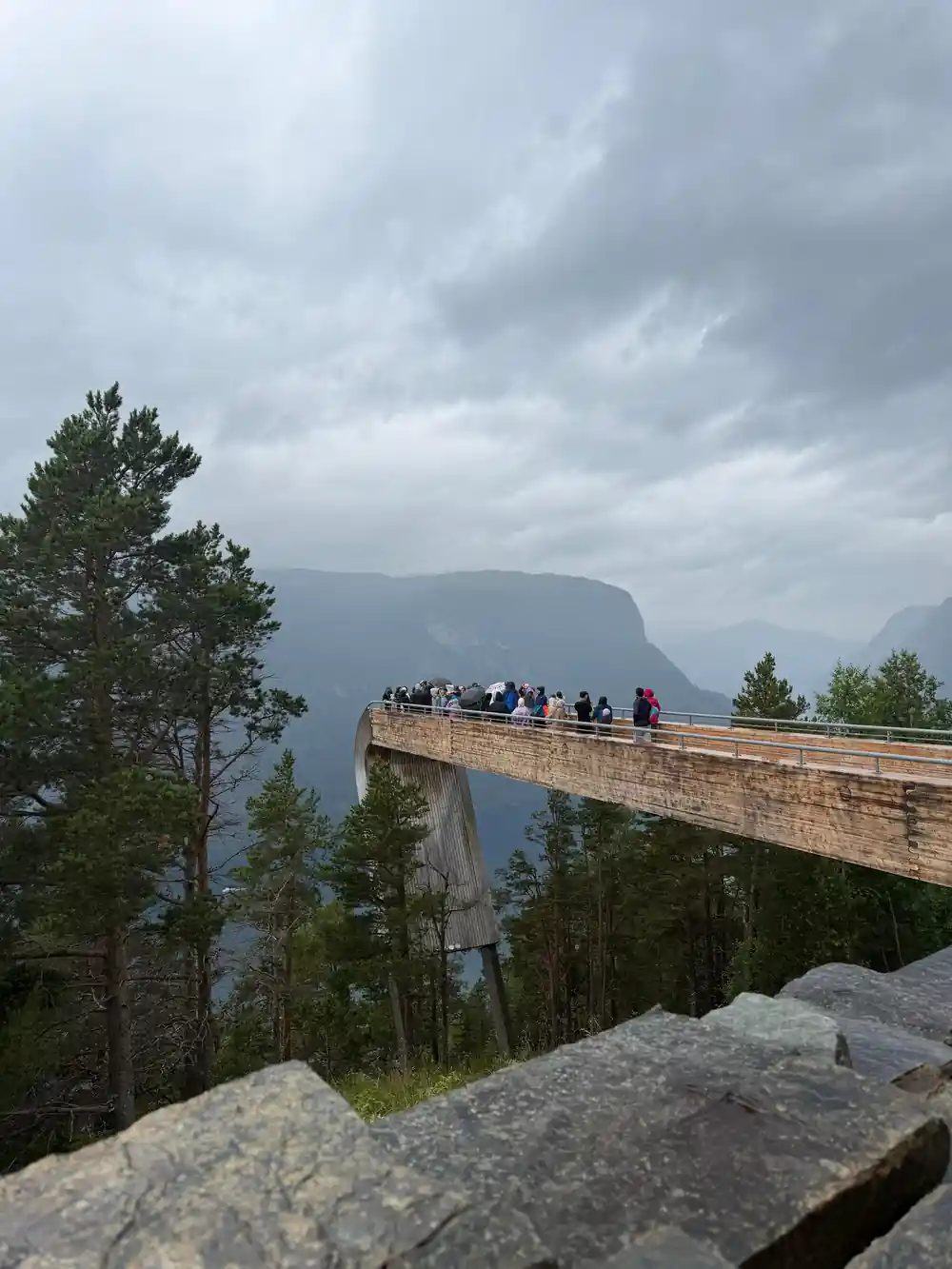
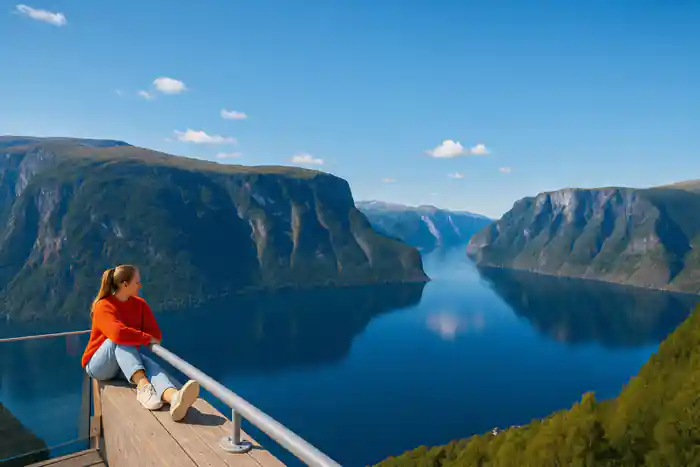
At the top is Stegastein: a timber platform that runs thirty metres straight out from the hillside, with a rail of glass, and an end that turns downward instead of stopping. Standing at that end, the last thing between you and the fjord is a sheet of glass angled towards the water.
It was built as architecture rather than as parking, and it is the single most memorable thing on the itinerary for a lot of people, the cruise included. Thirty minutes is what you get and it is enough.
The waterfall nobody expects
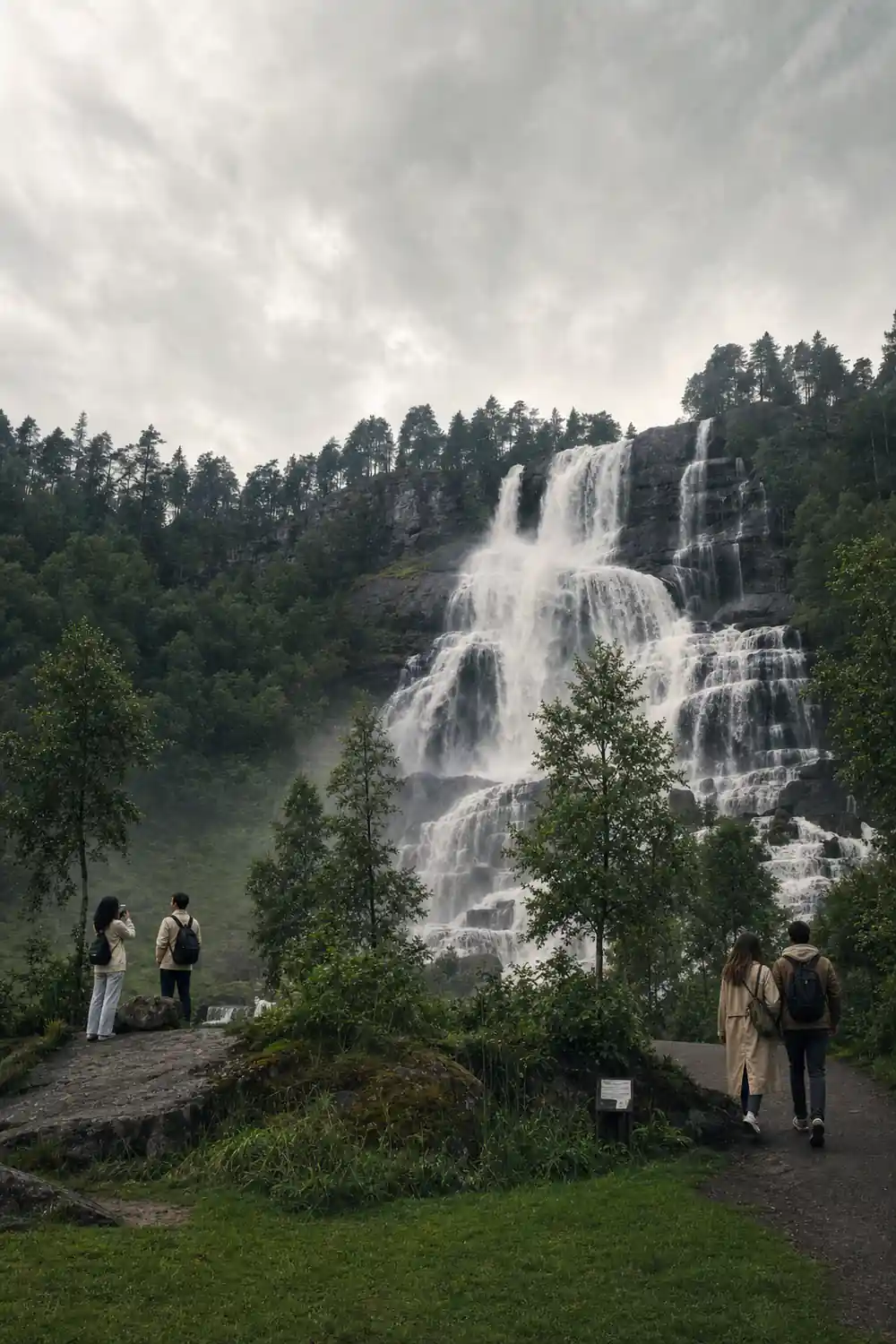
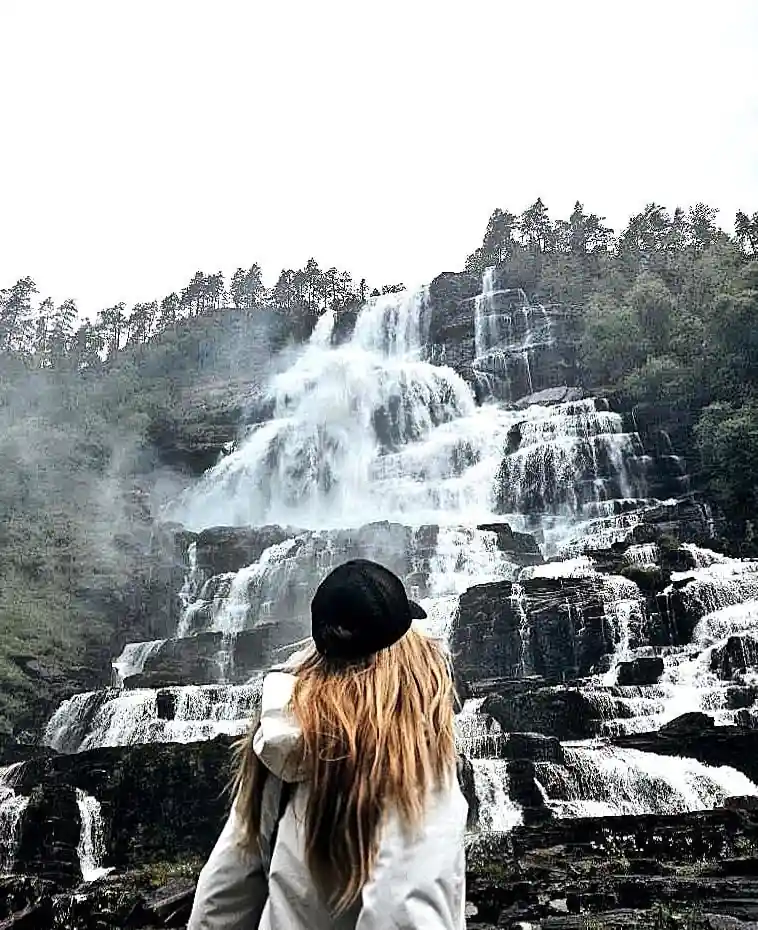
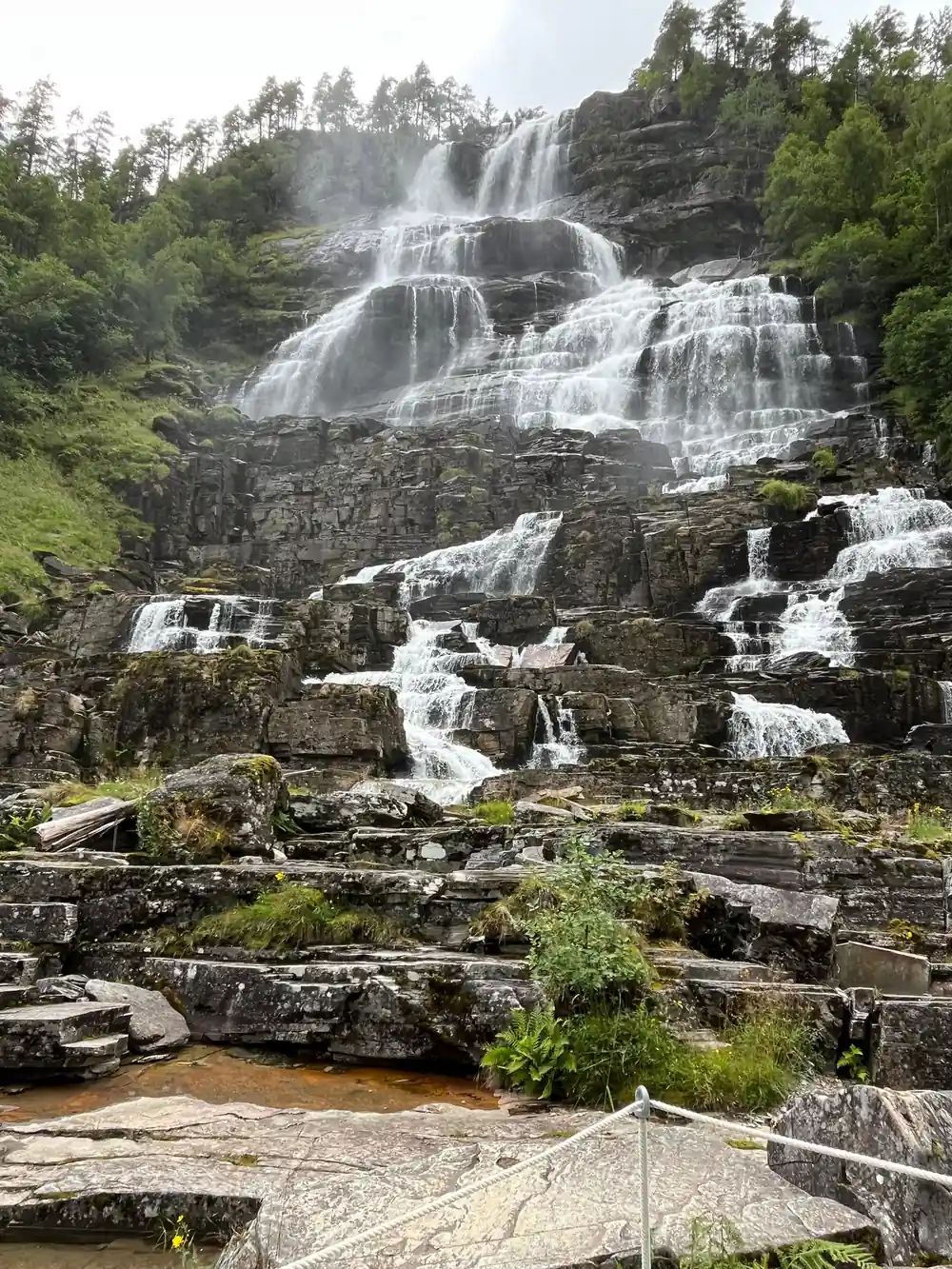
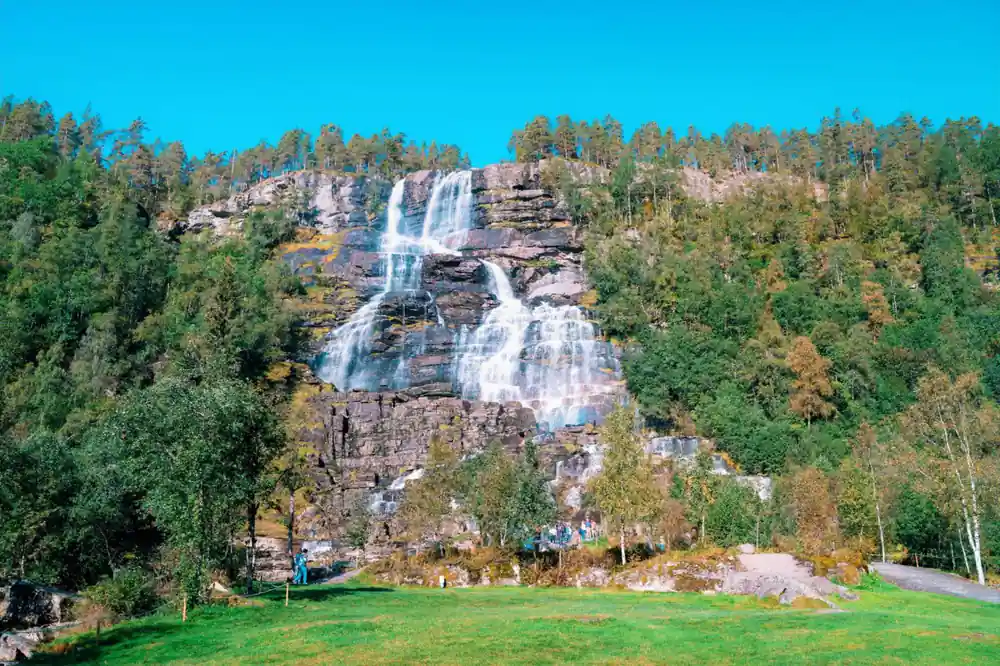
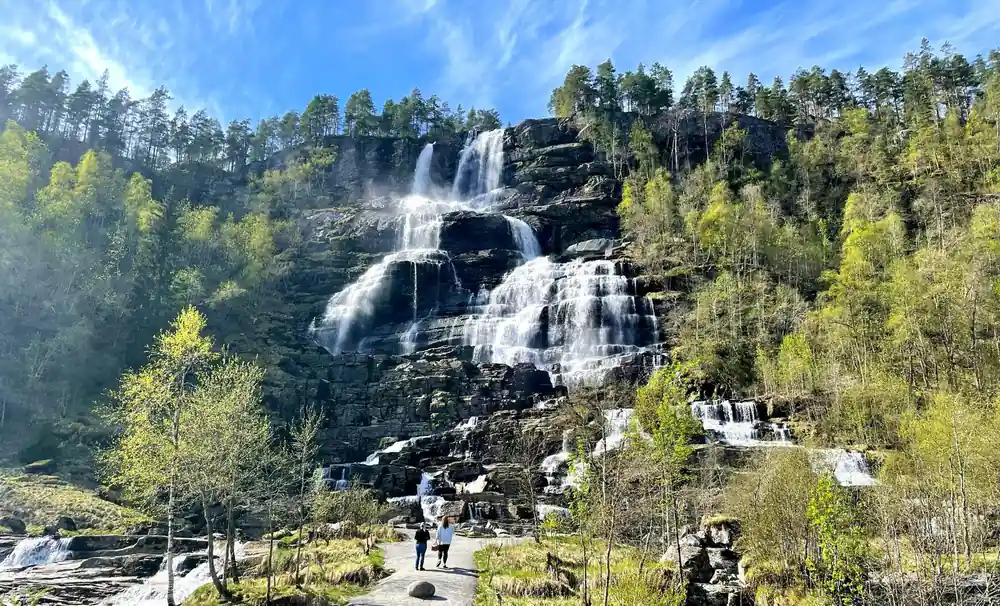
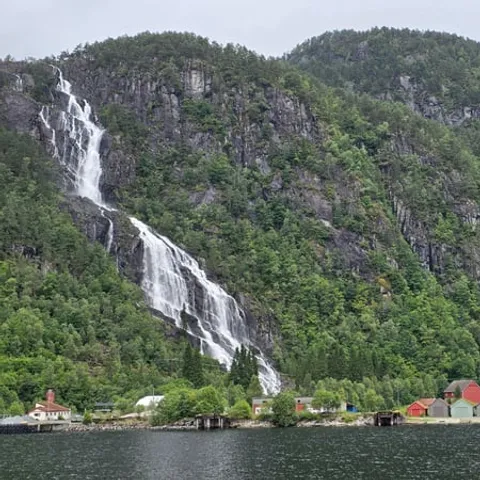
Somewhere in the third hour the coach pulls in beside Tvindefossen, and the itinerary calls it a photo stop.
It is a hundred and ten metres of water breaking into dozens of separate strands over a dark rock face, with a path that takes you close enough to feel the spray. In most countries it would be the reason for the trip. Here it is a twenty-minute pause on the way to something else.
That is worth knowing in advance, because twenty minutes goes quickly and the people who get the best out of it are the ones who walk straight to the base rather than photographing it from the car park.
What the day includes
A guide for the whole twelve hours, the two-hour cruise, a light lunch, an afternoon coffee, and a coach that is built for this kind of road.
Dietary requirements need to be with the operator by two o'clock the day before, which is the one piece of admin this tour asks of you. Personal spending and tips are not included, and there is very little to spend money on between Bergen and Flåm in any case.
The tour runs in all weather. Western Norway is one of the wettest inhabited parts of Europe and a fjord day that only ran in sunshine would run about a third of the time.
Who it suits, and who it does not
It suits anyone with one full day in Bergen who wants the fjord rather than the city. It is the most complete version of that day available from this quay, and it covers ground that takes two days to do independently.
It does not suit anyone who dislikes coaches, because a third of the day is one, or anyone with significant mobility limits: there is a good deal of getting on and off, and the operator lists mobility impairment as unsuitable.
It also does not include the Flåm Railway, which is the most common misunderstanding about this excursion. That is a separate ticket on a separate route, and the comparison is worth reading before you book either.
It also rewards a particular kind of traveller: the one who would rather see one thing properly than four things briefly. There is no shopping stop, no folklore show and no packed schedule of attractions. There is a road, a fjord, a viewpoint and a waterfall, and the day gives each of them enough time to register.