The quick version
- And on a busy day, several thousand visitors at once.
- The village is small enough that nothing needs a plan.
- The harbour and a coffee, or the village. Not comfortably both.
- You will see it. It is not part of this tour.
How small it actually is
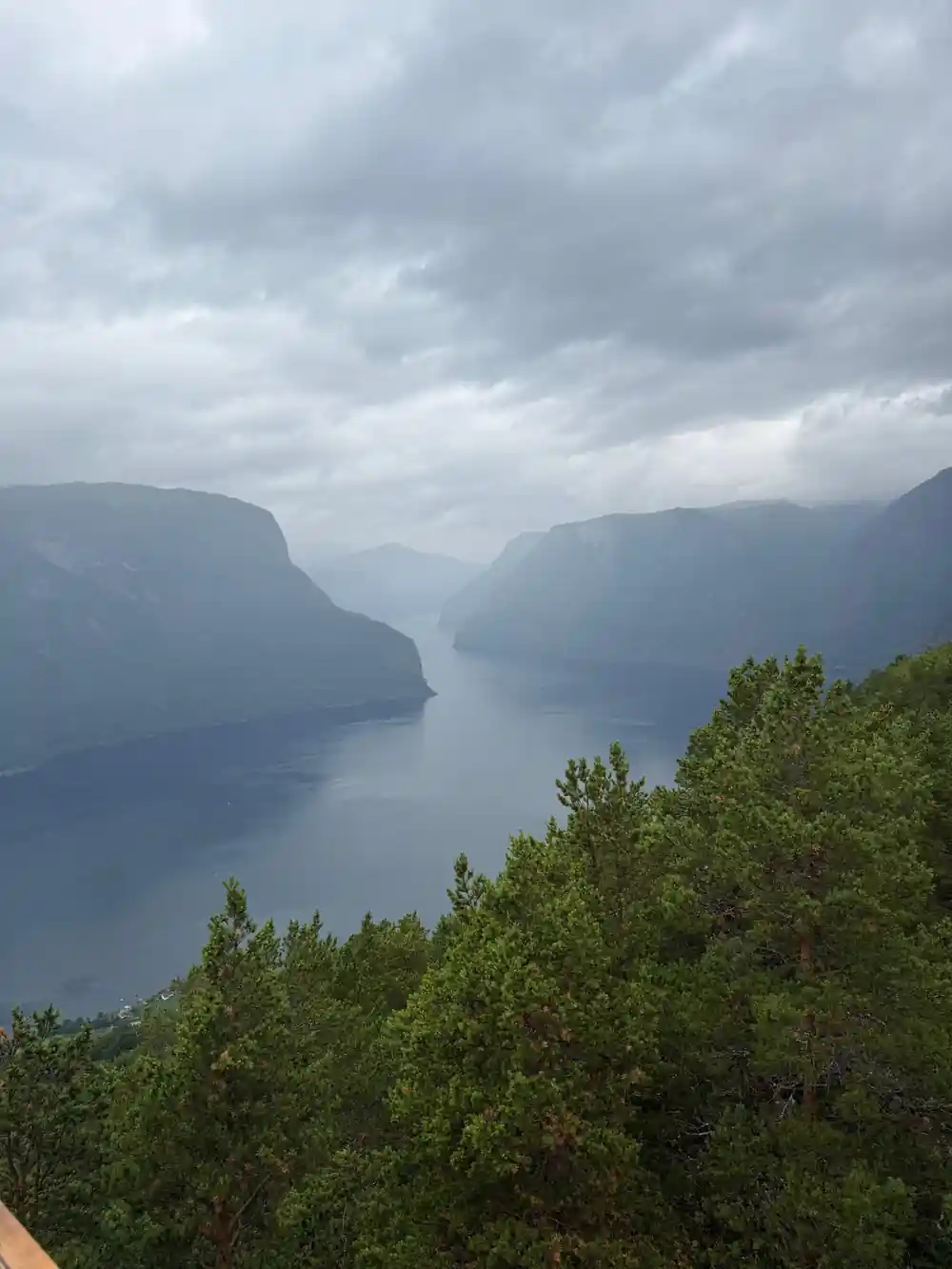
Flam has a few hundred permanent residents. It sits at the head of the Aurlandsfjord where a green valley comes down to the water, hemmed in by walls on three sides, and there is no room for it to be any bigger than it is.
Against that, it receives cruise ships. Large ones come right up the fjord and berth beside a village that could fit into one of them several times over, and on a two-ship day the visitor count runs into the thousands against a resident population you could seat in a school hall.
That ratio is the most interesting thing about Flam and the thing most descriptions leave out. It is not a village that happens to get visitors; it is a village that has been comprehensively reorganised around them, and it is worth looking at with that in mind rather than expecting an untouched hamlet.
The valley behind is the reason any of it is here. Flat, sheltered ground at the head of a fjord is rare in this landscape, and where it exists people have farmed it for a very long time. The village is the modern layer on top of something much older.
What is actually there
Everything is within a few minutes of the quay, which makes forty minutes workable.
There is a cluster of buildings around the harbour: a visitor centre, shops selling wool and souvenirs, a couple of places to eat and drink, and a brewery that has become the village's best-known business. There is a small railway museum, free to enter, which is more interesting than it sounds if you have any interest in how the line was built.
Beyond that there is a church a short walk up the valley, a river, and the valley itself opening out behind the village with farms on the flat ground.
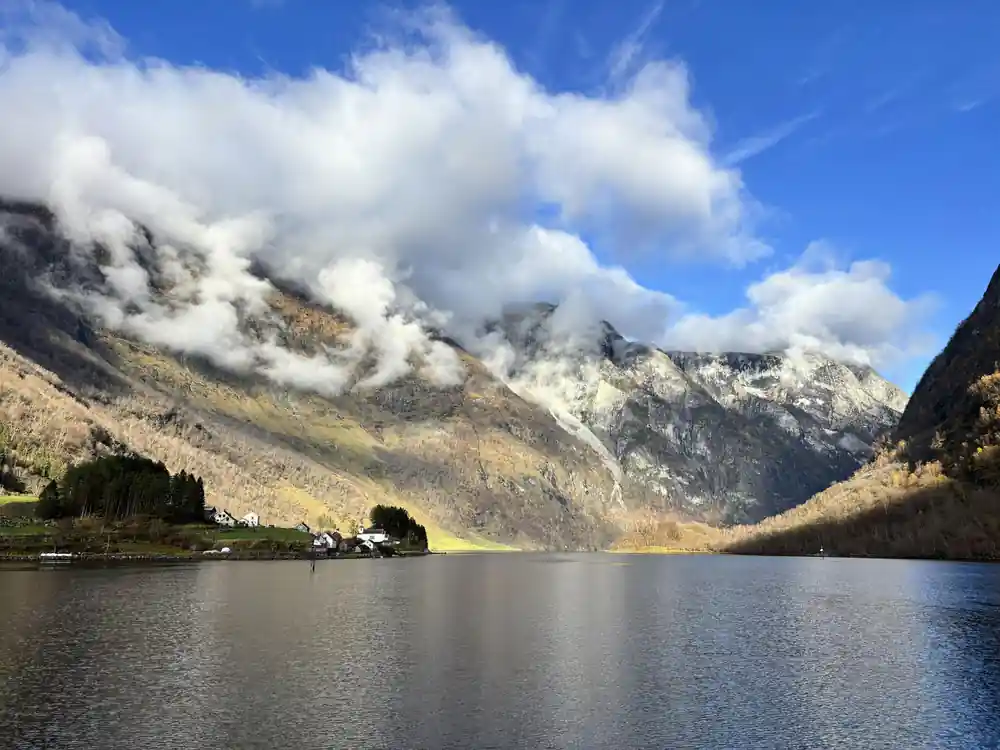
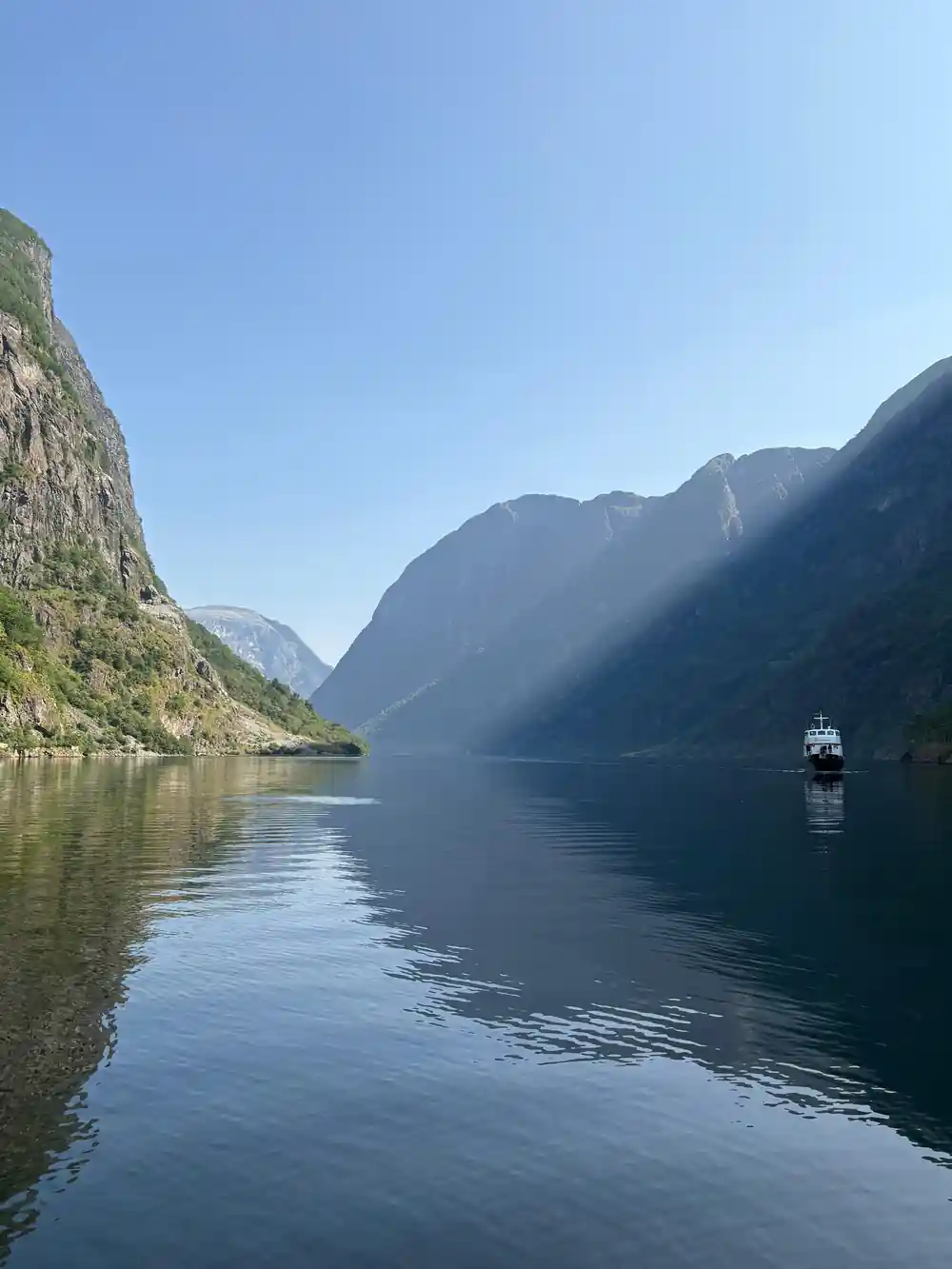
And there is the setting, which is the actual attraction. Standing at the head of the Aurlandsfjord looking back down it is free, takes no time, and is better than anything you can buy in the shops.
It is also the one place on the itinerary where you can buy anything. Between Bergen and here the day passes a roadside waterfall, a quay and a boat, so anyone planning to bring something home does it in these forty minutes or not at all.
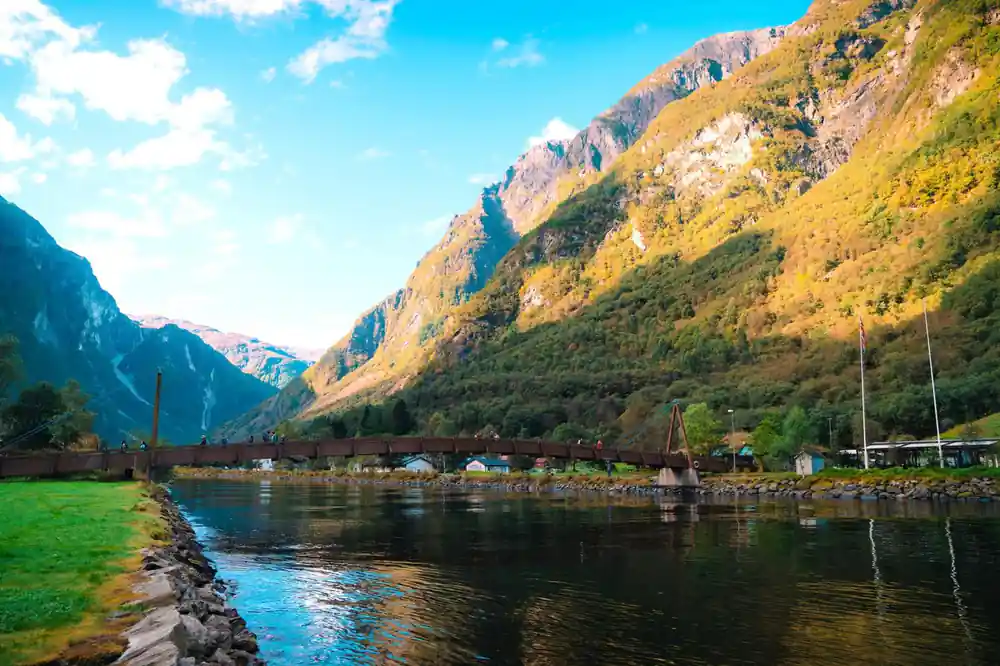
The harbour at Flam with the valley behind it
What forty minutes really buys
Be honest with yourself before you step off the coach, because forty minutes is one thing and not two.
Option one is the harbour: walk out along the waterfront, look back down the fjord, take photographs, buy a coffee, and be back with time spare. This is the right choice if the fjord is what you came for.
Option two is the village: walk up past the shops to the church and the valley, which gets you away from the crowd within three minutes and shows you a working place rather than a retail one. This is the right choice if the crowd on the quay is putting you off.
What does not work is trying to shop, eat a sit-down meal and see the valley. People attempt it, and they spend the climb to Stegastein complaining about how rushed Flam felt when the truth is that forty minutes was fine and the plan was not.
The railway, and why it is everywhere
You cannot miss the railway in Flam. The station is at the quay, the line runs up the valley behind the village, the museum is about it, and half the merchandise references it.
It is a mountain railway climbing from sea level here to Myrdal high above, and it is one of the most photographed railway journeys in the world. It is also a separate ticket on a separate route, and it is not part of this tour.
That confusion is the most common one about this excursion, and it is worth reading the comparison rather than discovering it at the station. Nothing has gone wrong if you do not board a train in Flam; the day was never going to.
What you can do in forty minutes is look at it. The rolling stock is usually sitting at the platform, the museum is free, and both are two minutes from where the coach parks.
Forty min
What you get in Flam. It is the harbour and a coffee, or the village and the valley. Choosing before you step off the coach is the whole trick.
Is it a real village
Yes, with an asterisk, and the asterisk is not a criticism.
People live here year-round, farm the valley, run the businesses and send children to school. The winter version of Flam, with the ships gone and the shops shut, is a small Norwegian settlement at the end of a fjord like dozens of others.
The summer version is a tourism machine, and it makes no attempt to hide that. There is no pretence of an undiscovered fishing village, and that honesty is easier to like than the alternative.
The right way to take it is as the place where the fjord ends and the road begins, which is exactly what it has always been. The ships are new. The function is not.
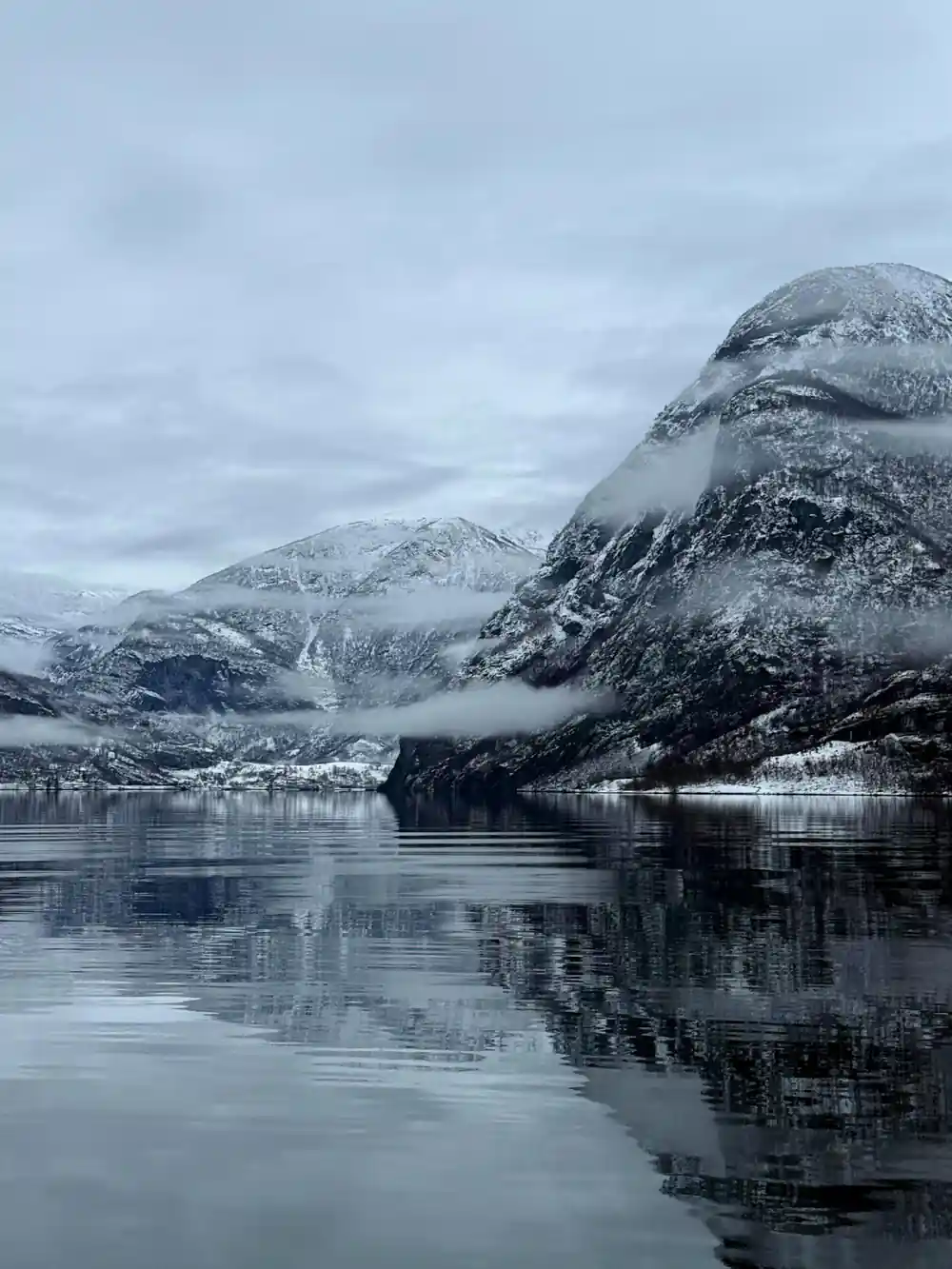
The winter photographs are worth looking up if you get the chance. The same quay with no ships, snow on the valley floor and four hours of daylight is a different place entirely, and it puts the summer version in proportion.
Where the fjord ends and the road starts again
from US$310Reserve now & pay later