The quick version
- The head of the fjord, reached by road down a narrowing valley.
- One way, ending at Flam where the coach picks you up again.
- Modern low-emission vessels, and on deck you hear water instead of engine.
- A heated cabin and open decks. Most people use both, repeatedly.
Gudvangen, the place you board from
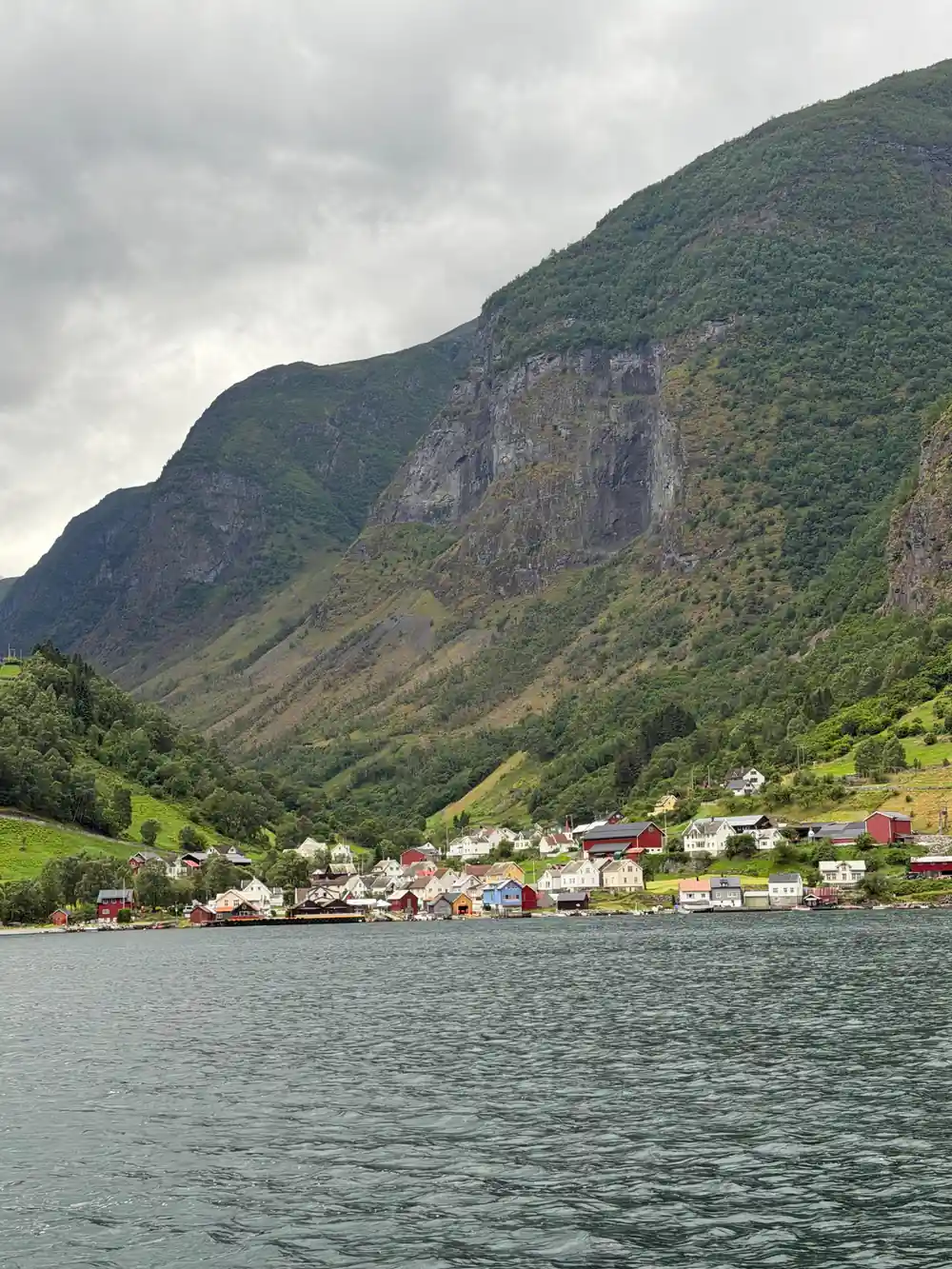
Gudvangen sits at the very head of the fjord, at the point where a valley running down from the high ground finally meets salt water. It is a quay, a handful of buildings, a car park and some very large rock.
The name means something close to the field or meadow of the gods, which tells you it has been noticed for a long time. There is a reconstructed Viking settlement nearby that runs as its own attraction, and it is not part of this itinerary; if you see turf roofs and timber from the coach, that is what they are.
The tour gets around twenty minutes here before boarding. That is a stretch, a toilet, and a chance to stand at the water and look straight up, which is the single best thing about the place. The walls above the quay are close enough and high enough that people instinctively lower their voices.
The vessel
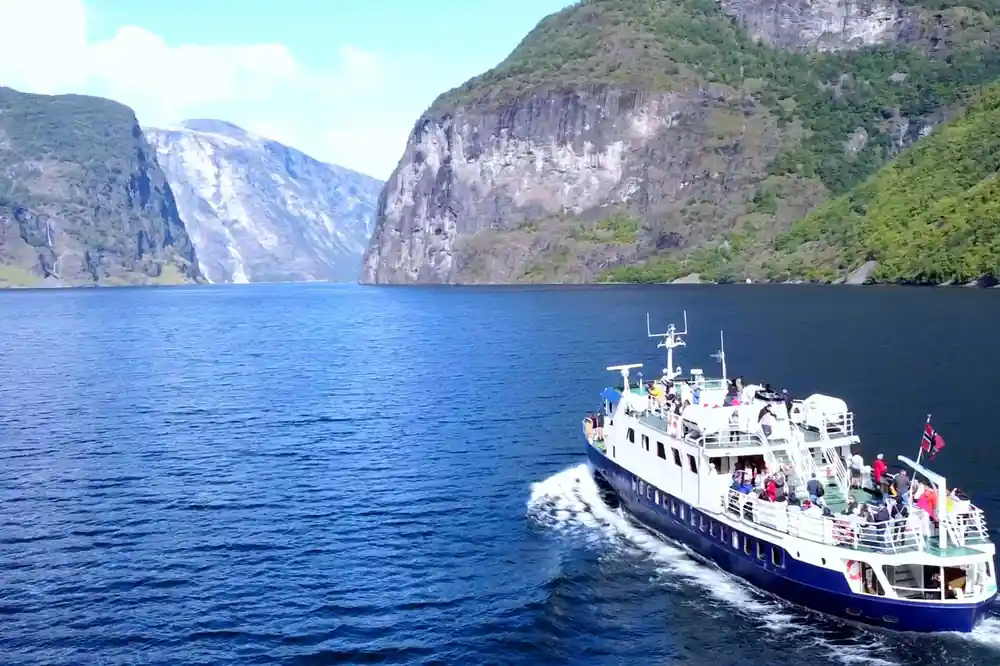
The boat is a modern passenger vessel built for this run rather than a repurposed ferry: a heated interior with large windows and seating, open deck space fore and aft, and a top deck for anyone prepared to be cold in exchange for an uninterrupted view.
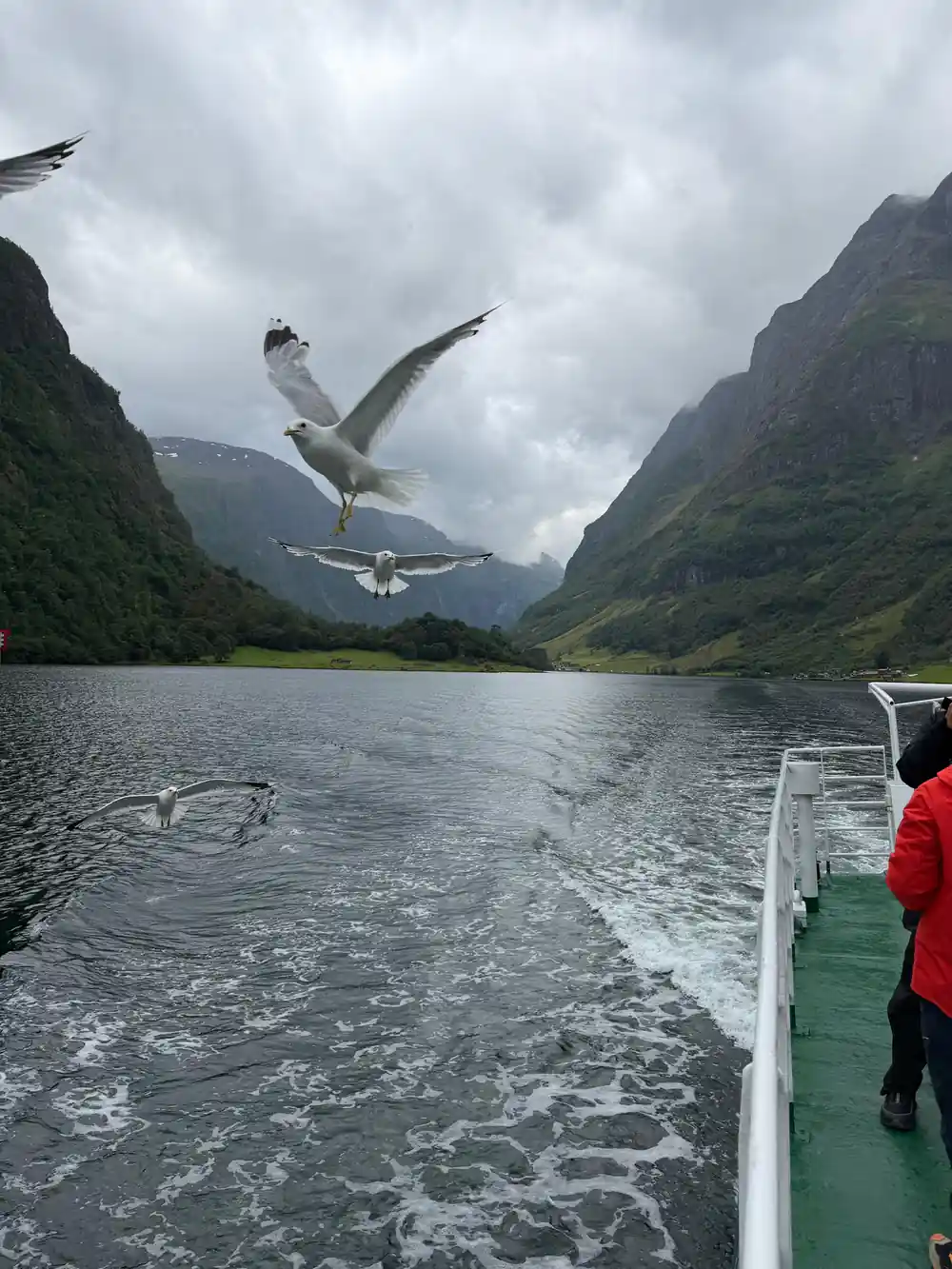
Low-emission propulsion is now standard on this fjord, and it matters for reasons beyond the environmental ones. A quiet vessel does not vibrate, does not smell of diesel, and does not drown out the fjord. What you hear on deck is water off the walls, birds, and the wash.
There are toilets on board and something to buy, which is worth knowing because two hours is long enough to want a coffee. Nothing about the vessel is luxurious and nothing needs to be: it is a very well-arranged way of moving people through scenery.
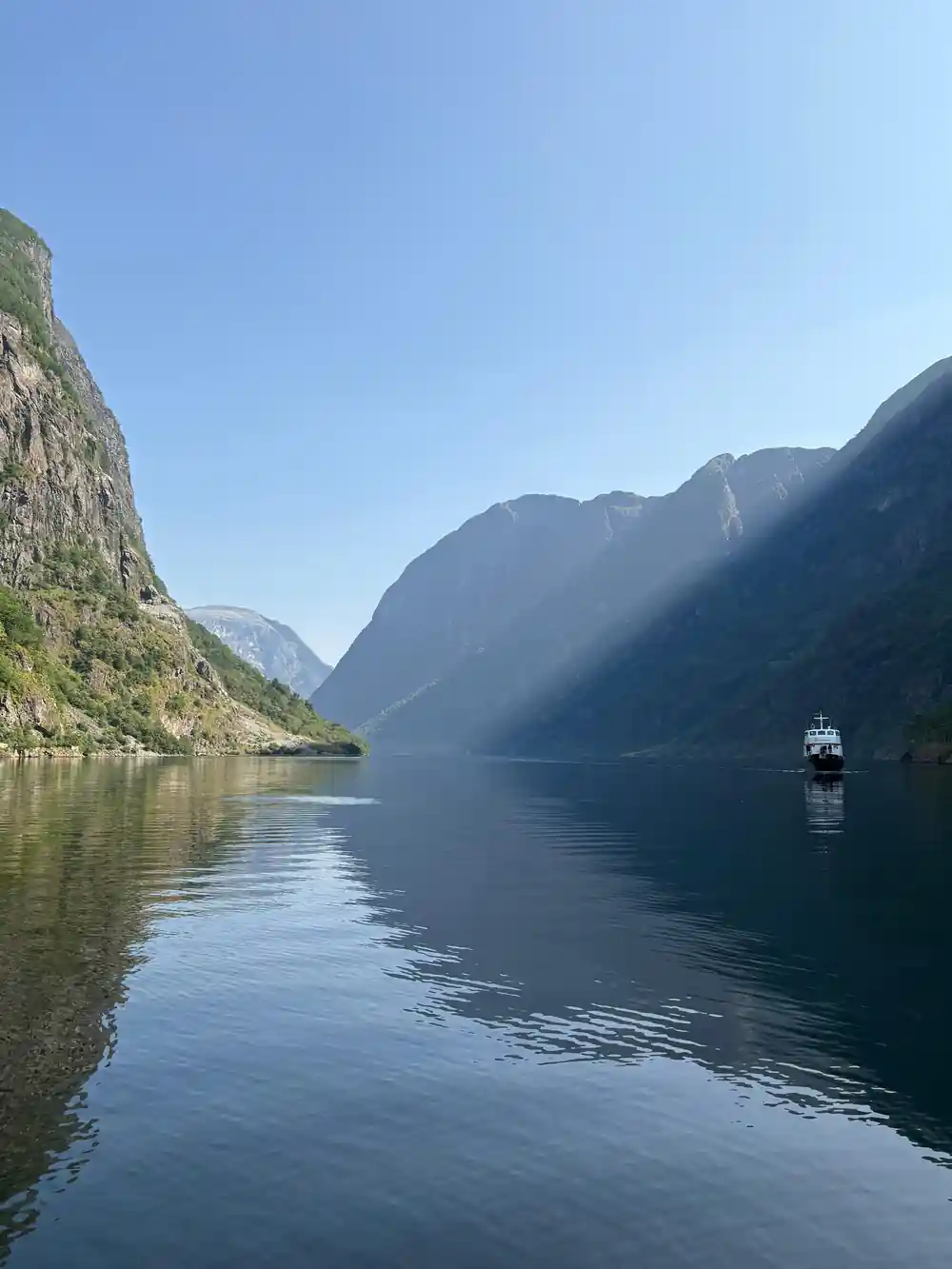
The open deck of the vessel between two walls of rock
Two hours, and how they feel
The crossing runs roughly two hours from Gudvangen to Flam. It is a one-way trip: you land at the far end, the coach meets you, and you do not come back the way you came.
That structure is the whole argument for this version of the day. A return cruise shows you the same water twice. This one uses the boat as transport, which means every minute of it is new, and it is why the coach has to make the long road transfer at all.
People underestimate how much changes in two hours. The fjord narrows, opens, turns, and the light does different things at each bend. Nobody spends the whole two hours in one seat.
The other thing nobody expects is how much time they spend outside. The deck is cold and everyone goes out anyway, comes in to warm up, and then goes straight back out again.
Two hours is also long enough to stop photographing, which is the best thing that happens on this boat. Most people work through their cameras in the first half hour and then simply stand and look, and that is when the fjord actually registers.
Where to stand
There is no single best side, because the vessel turns repeatedly and the walls are close on both.
The bow is the prize and it is the one place that gets busy, particularly in the first twenty minutes when everybody has the same idea at once. It thins out quickly as people discover the wind, and by the middle of the crossing you can usually walk straight up to the rail.
The stern is underrated. It gives you the fjord you have already passed through, framed by the wake, and it is more sheltered than the bow by a wide margin.
If it is raining, the interior windows are large and clean and the view through them is genuinely fine. This is not a trip where bad weather means you have paid for nothing.
Two hours
Gudvangen to Flam, one way. The boat is transport rather than a round trip, which is why every minute of the crossing is water you have not already seen.
What to wear on deck
Colder than you think, and colder than the temperature reading, because the vessel is making its own wind on top of whatever the fjord is doing.
A wind-proof outer layer is the important item. Fleece under it, a hat that will not blow off, and gloves if you intend to hold a camera still for two hours. People who dress for the town they left at half past seven end up watching the best part of the day through glass.
Waterproof matters as much as warm. Rain here arrives sideways, spray comes over the bow, and a soaked jacket is the difference between using the deck and giving up on it.
Landing at Flam
The fjord widens as you approach Flam, the walls step back, and the village appears at the head of a green valley with a railway line running up it.
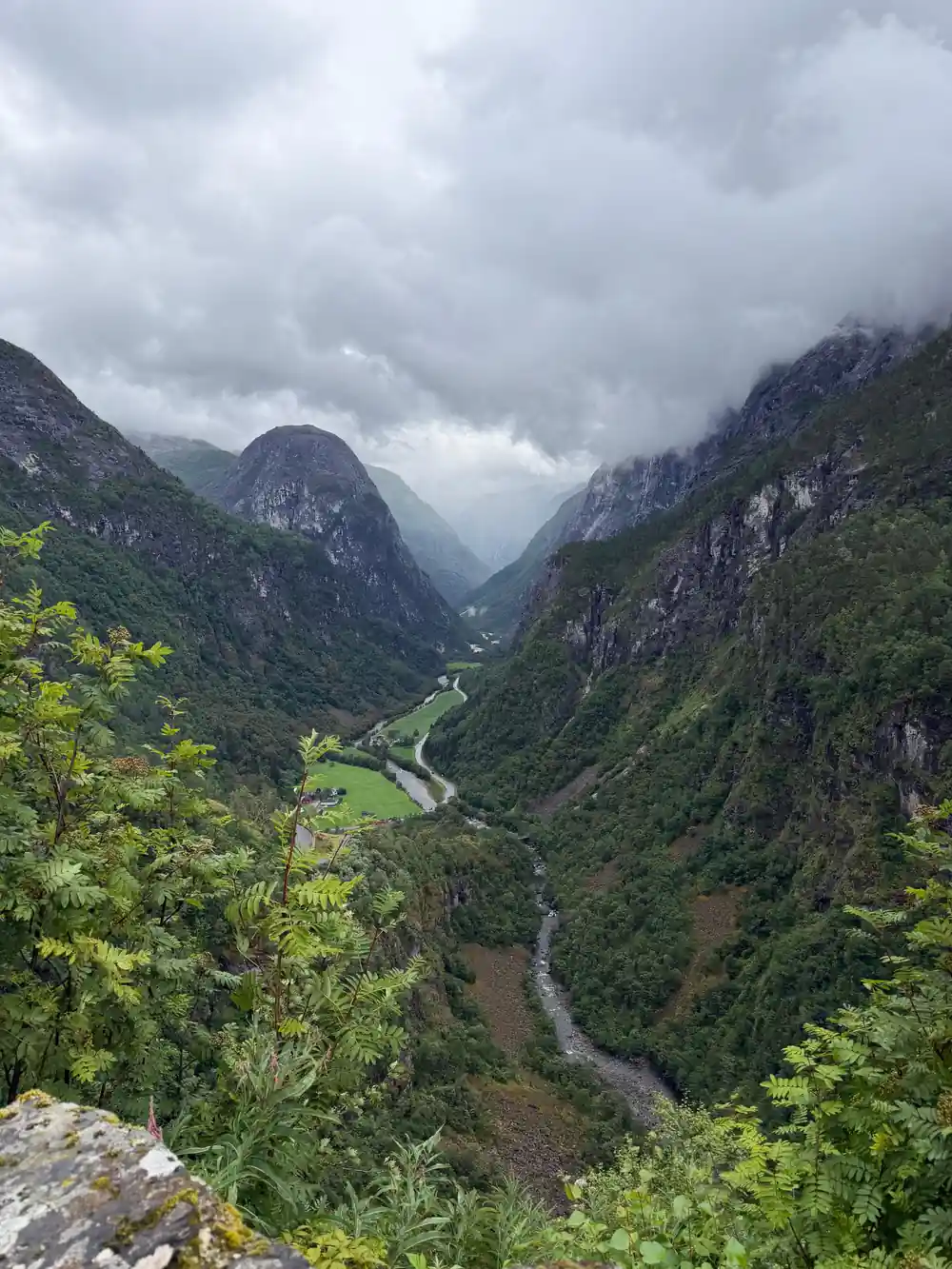
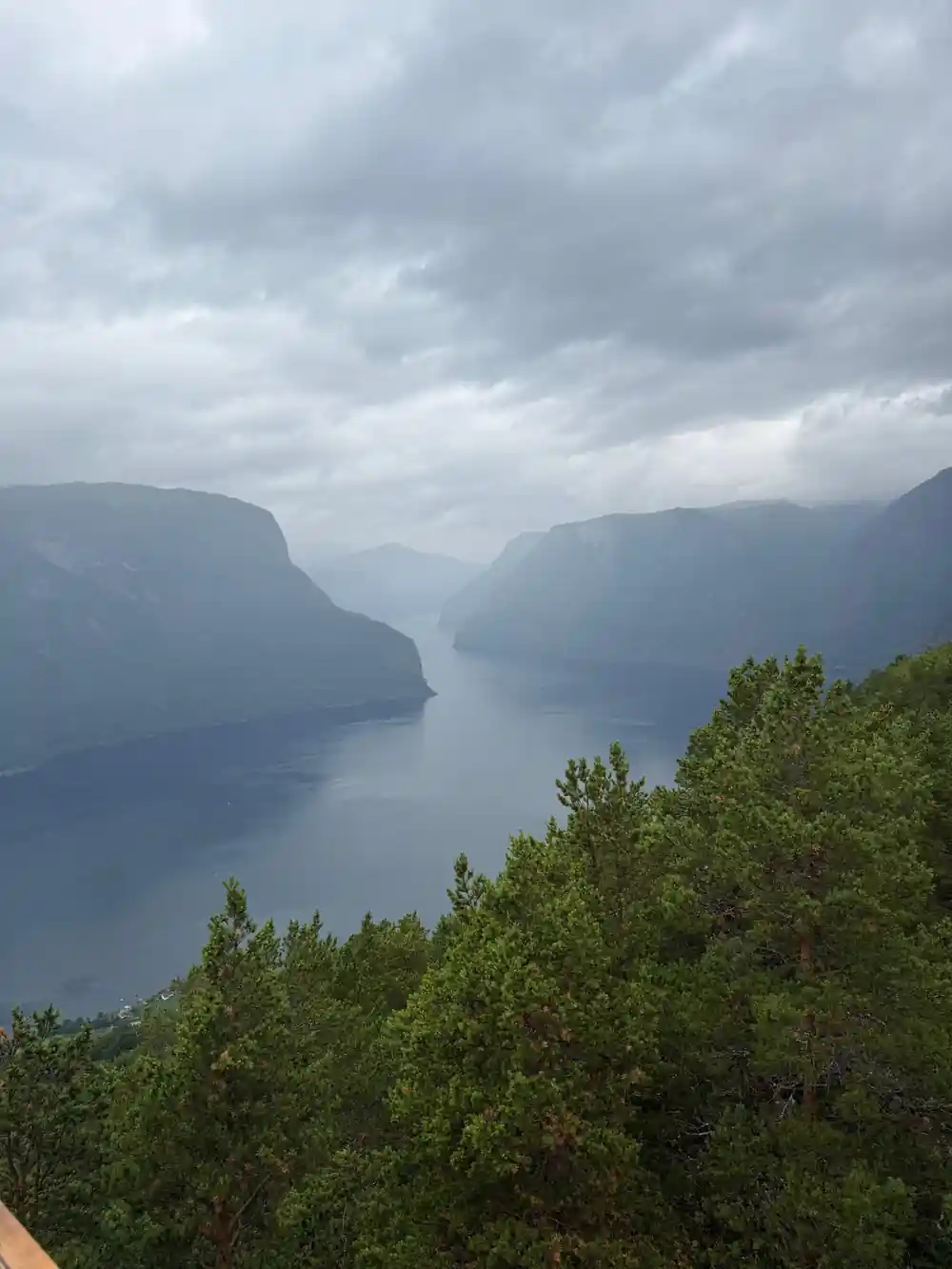
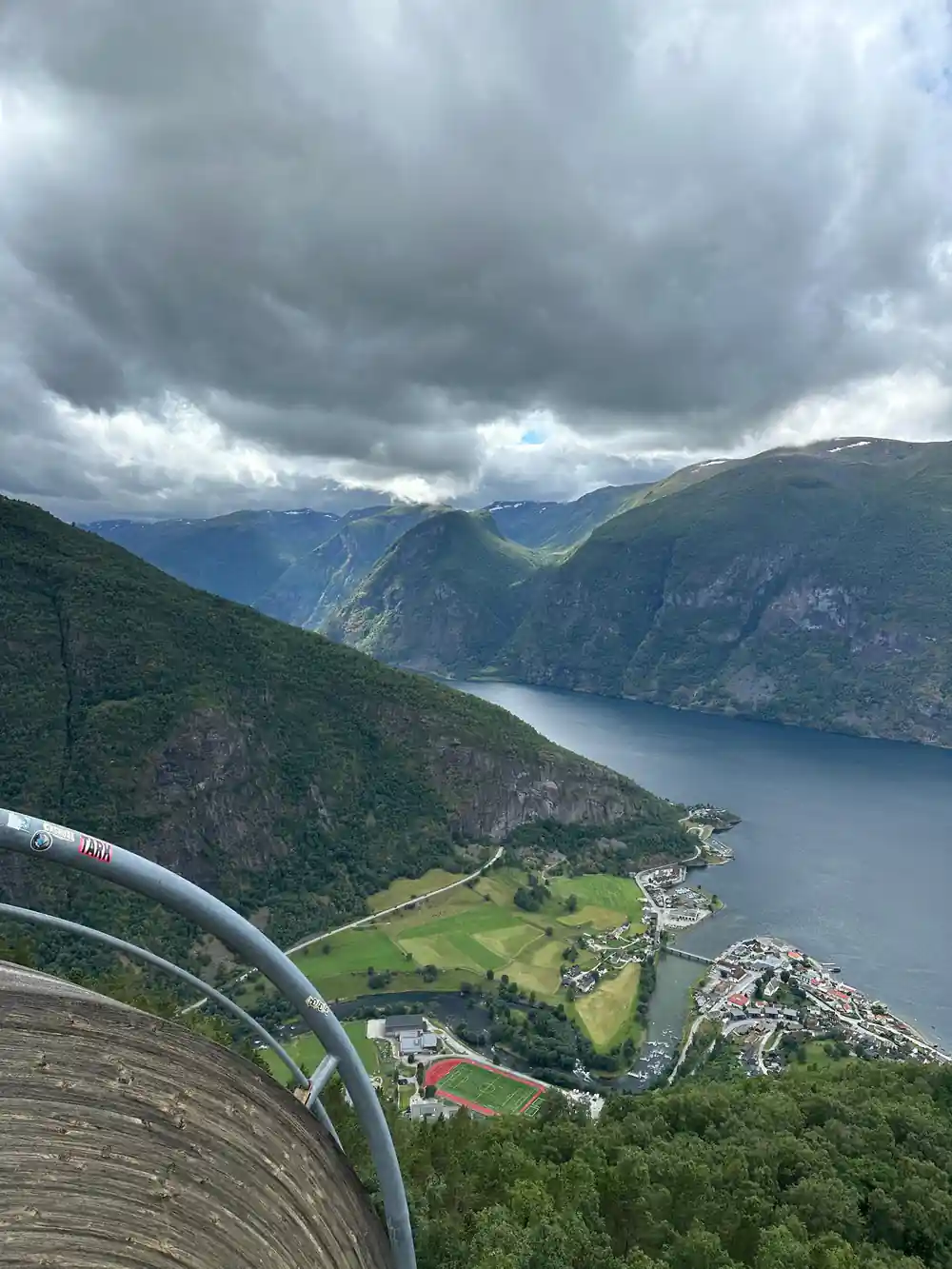
Docking is straightforward and the coach is waiting. You get about forty minutes here before the climb to Stegastein, which is its own subject and deserves reading about before you arrive rather than after.
The transition is abrupt and worth being ready for: two hours of near silence on the water, and then a working cruise village that on a busy day is handling several thousand people at once.
Two quiet hours between two walls of rock
from US$310Reserve now & pay later