The quick version
- The longest continuous stretch of scenery in the whole day.
- The Osterfjord first, then inland and up through Voss.
- A break at Dale and a photo stop at the Tvindefossen waterfall.
- More than anything else you decide before boarding.
Why the road goes the way it does
Bergen sits on the coast among islands and peninsulas, and the fjord this day is built around lies a long way inland behind a mountain barrier. There is no direct line between the two and there never has been.
So the route works with the terrain rather than against it. It runs inland along the Osterfjord, climbs away from the water through the Vestland interior, passes Voss on the high ground, and then drops down a valley to reach the head of the Naeroyfjord from above.
That is around three hours for a distance that looks far shorter on a map, and the explanation is the same one that explains every road in western Norway: water and rock get a vote, and they usually win.
The Osterfjord, and the first hour
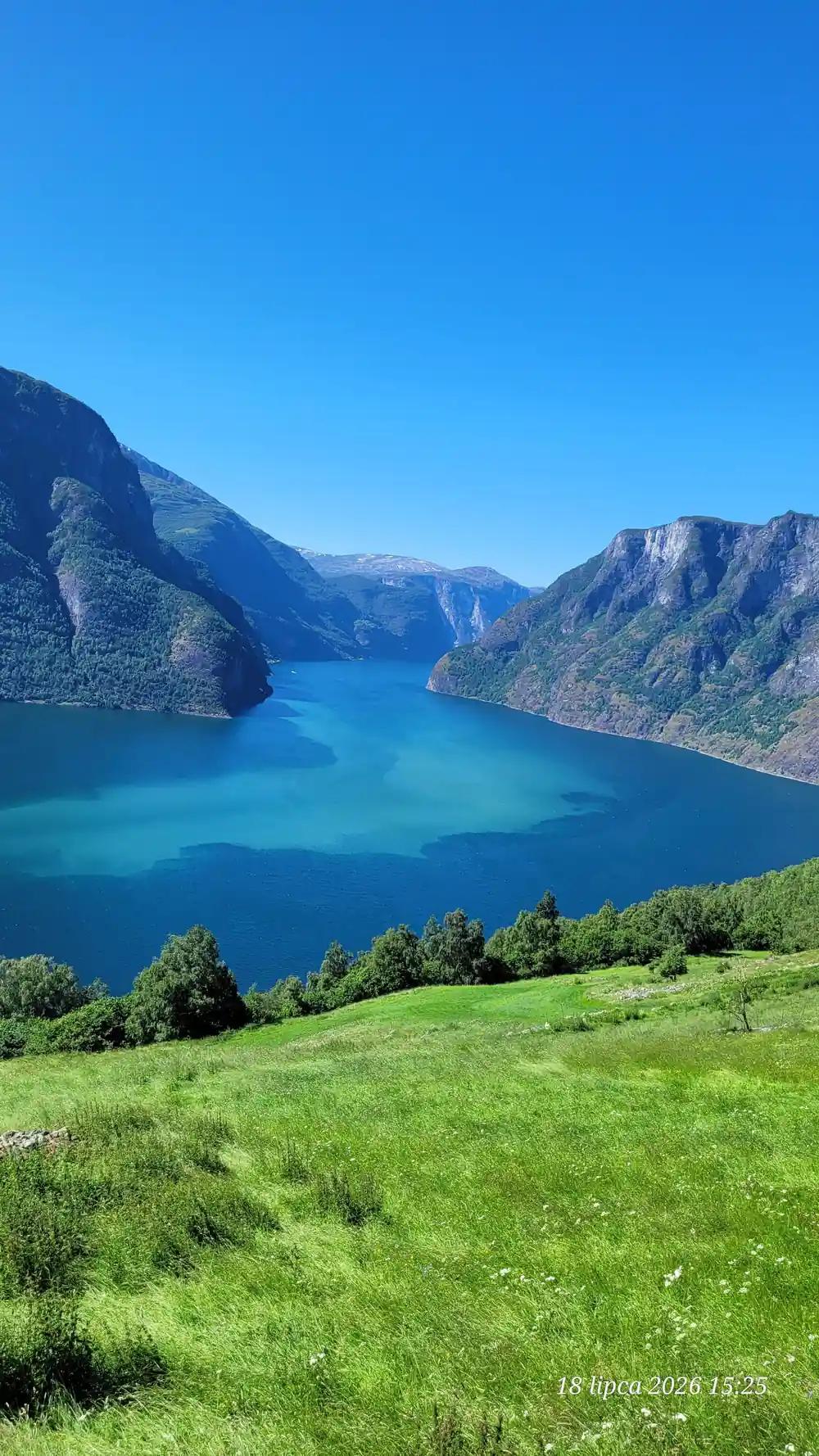
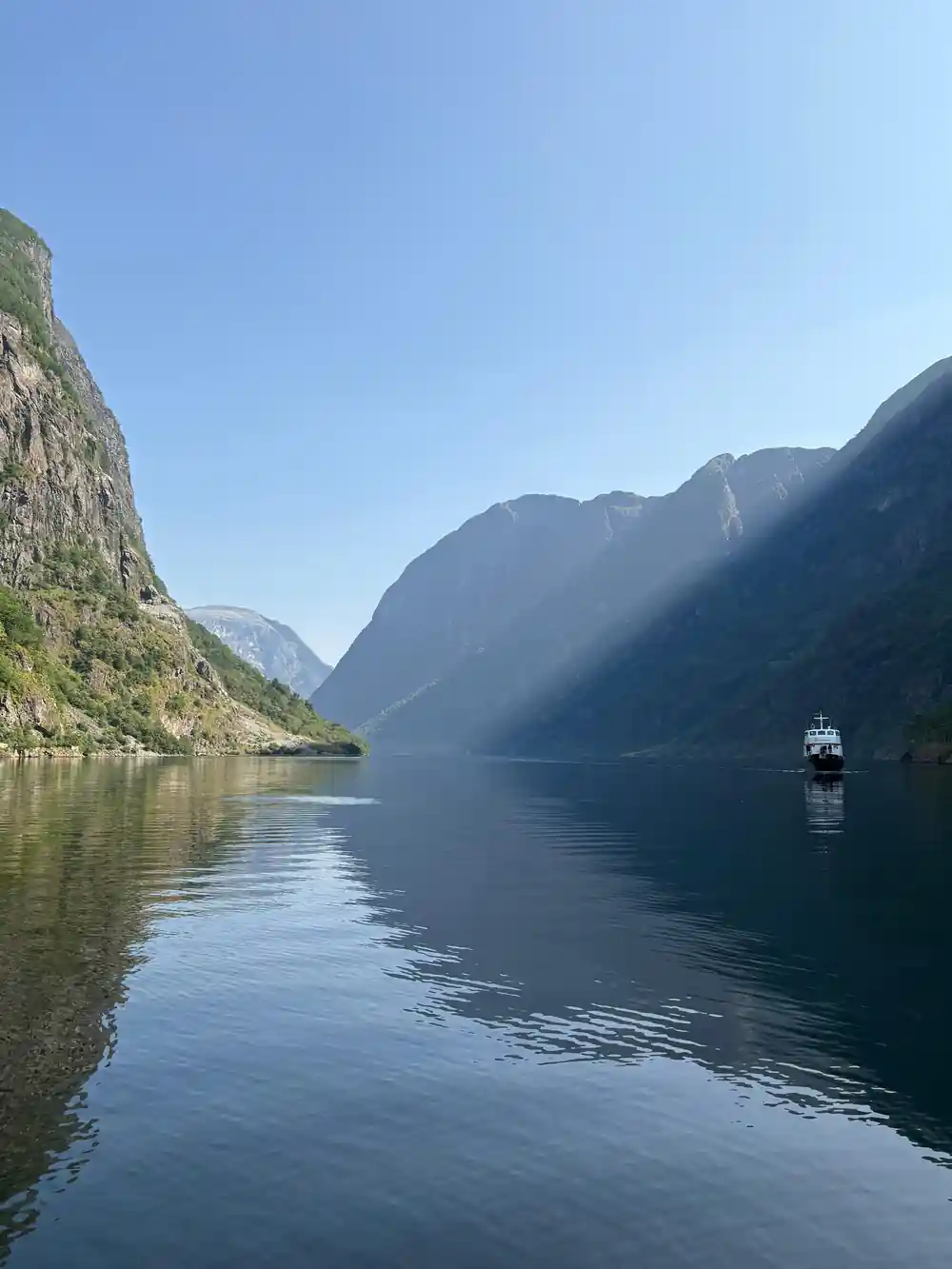
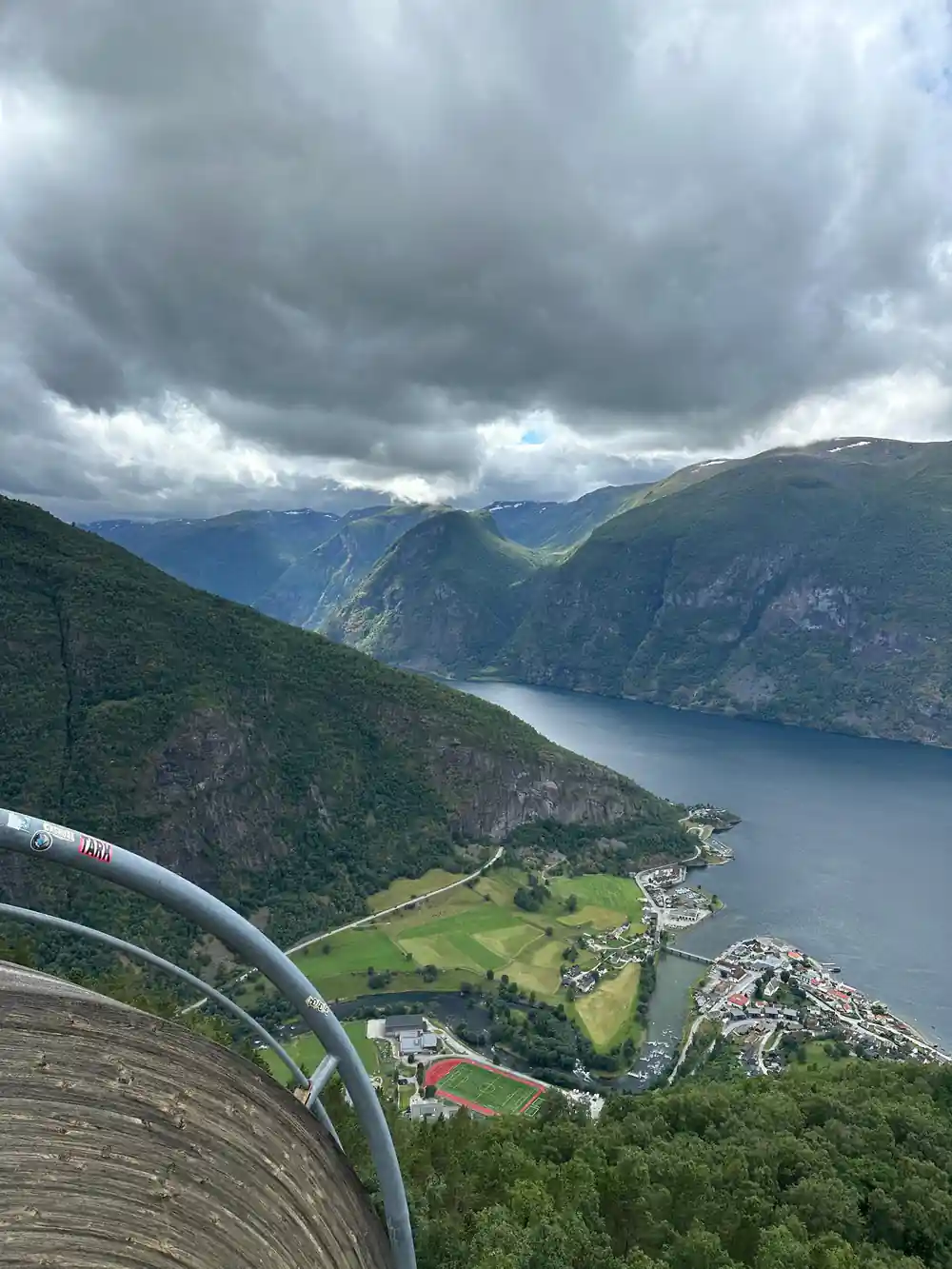
The first stretch out of Bergen runs beside the Osterfjord, and it sets the tone for the day: still water on one side, rock rising directly from the verge on the other, and small settlements wherever a patch of level ground allowed one.
This is fjord country before you reach the famous fjord, and it is worth staying awake for even at eight in the morning. After rain there are waterfalls coming off the tops in threads, sometimes several in view at once.
There is a short break at Dale, which is a working town rather than a sight. Fifteen minutes, a chance to stand up and buy a coffee, and then back on the road.
A lake beside the road under low cloud
Inland, and up to Voss
After Dale the road turns away from the water and climbs, and the character changes completely. Enclosed fjord gives way to broad valley, farmland, forest and lakes, with the mountains further back and higher.
You pass Vangsvatnet, the lake beside Voss, and then Voss itself. It is the biggest place between Bergen and the fjord, a town that lives on outdoor sport and the railway, and it is the reason there is any infrastructure at all along this stretch.
Shortly after comes Tvindefossen, the tall multi-strand waterfall that gets its own twenty-minute stop, and which has its own page here because twenty minutes considerably undersells it.
The change in altitude is the thing to watch for. You leave sea level on the Osterfjord and spend the next hour climbing, and by Voss the vegetation, the snow line and the light are all noticeably different from the coast you started on. Western Norway packs a lot of country into a short distance vertically.
Down to the head of the fjord
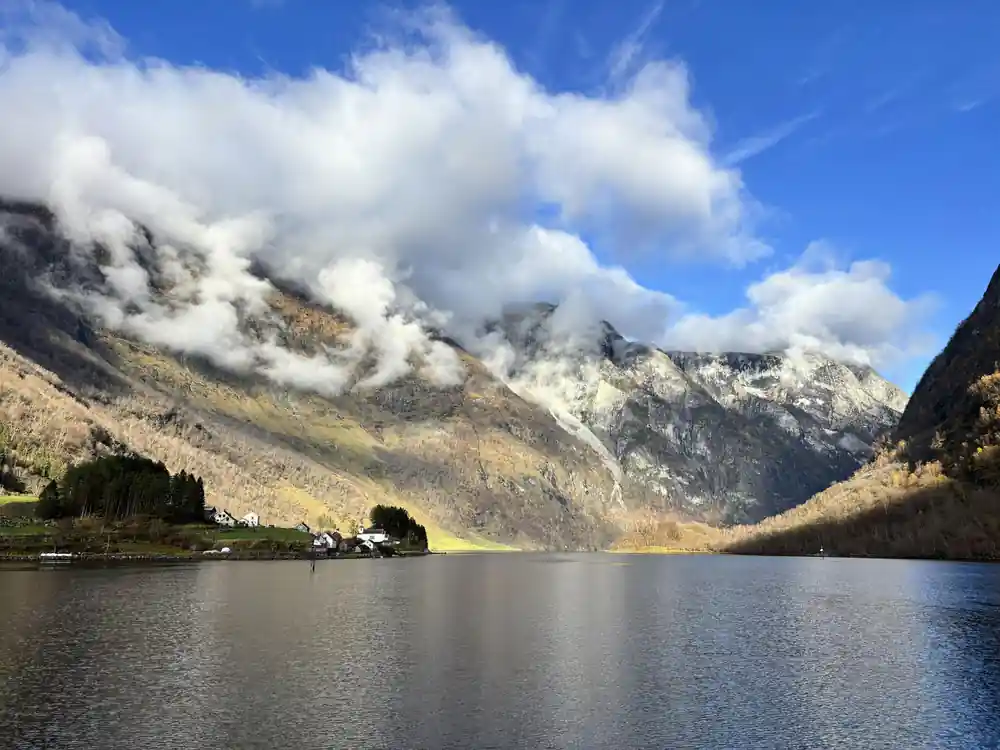
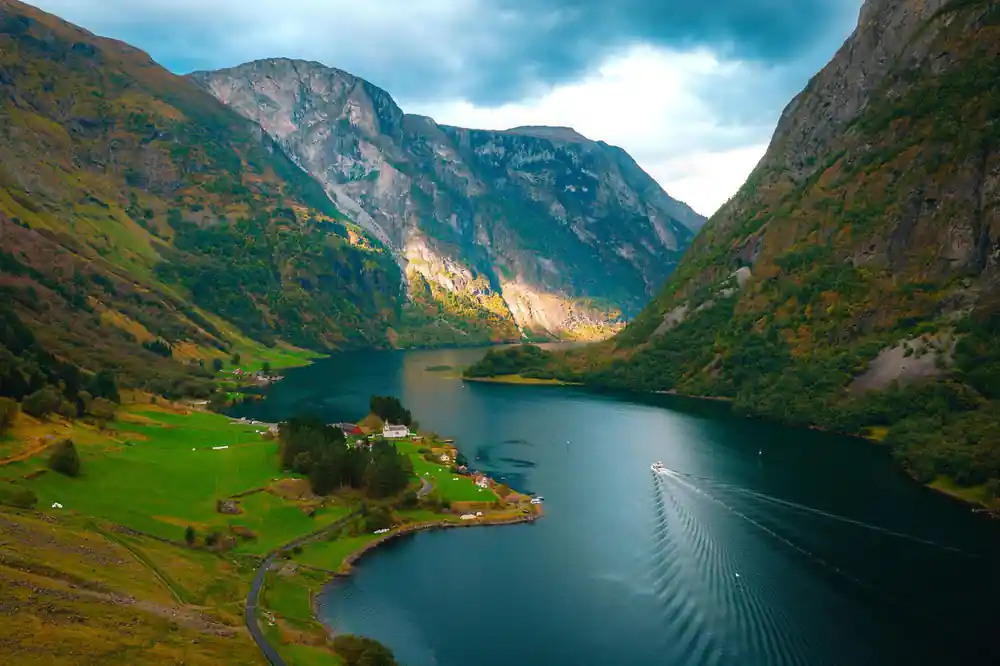
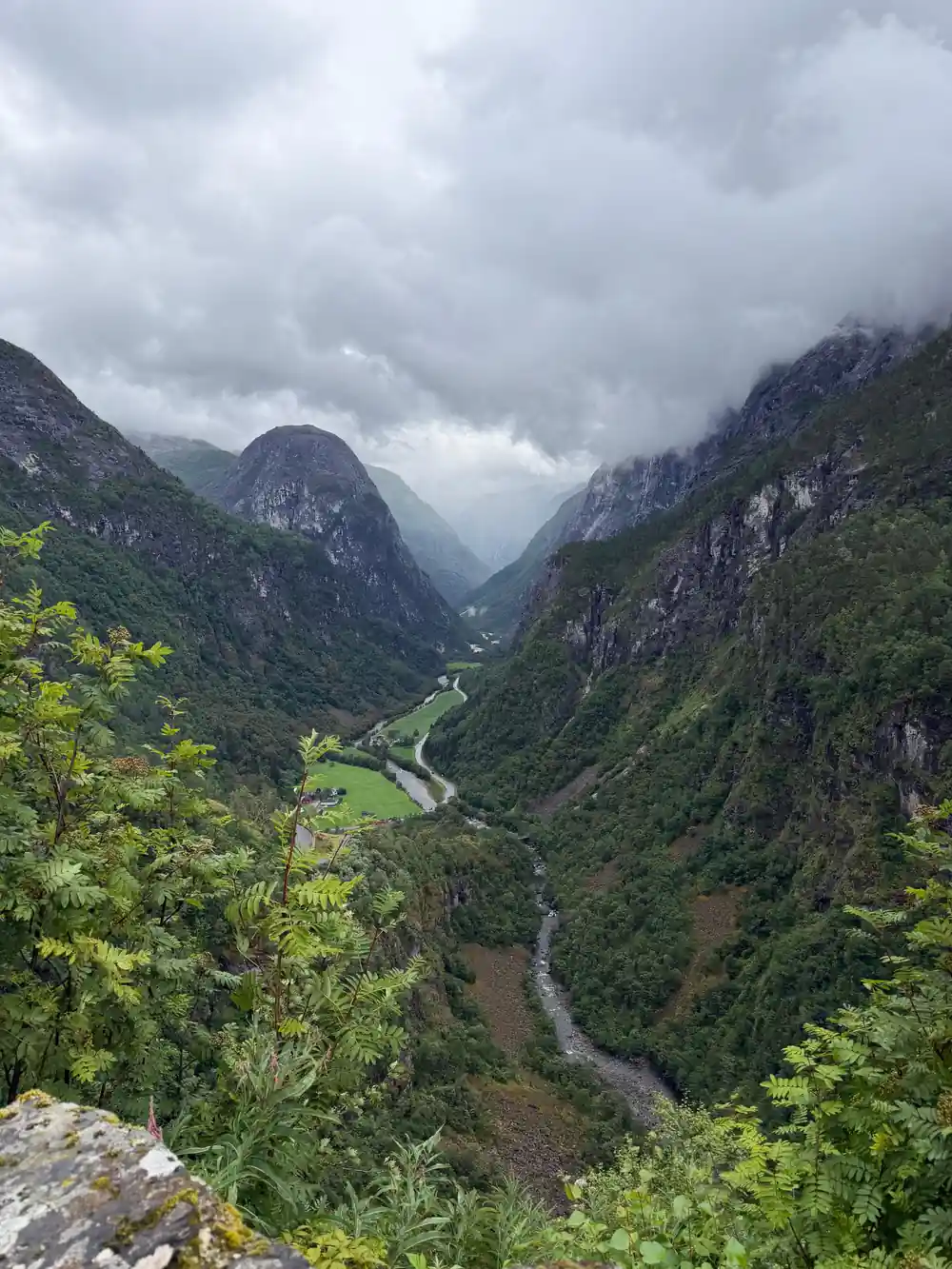
The last part of the outbound run is the best of it. The road descends towards the Naeroyfjord through a valley that narrows as it goes, with walls that get steeper and closer until the sky is a strip.
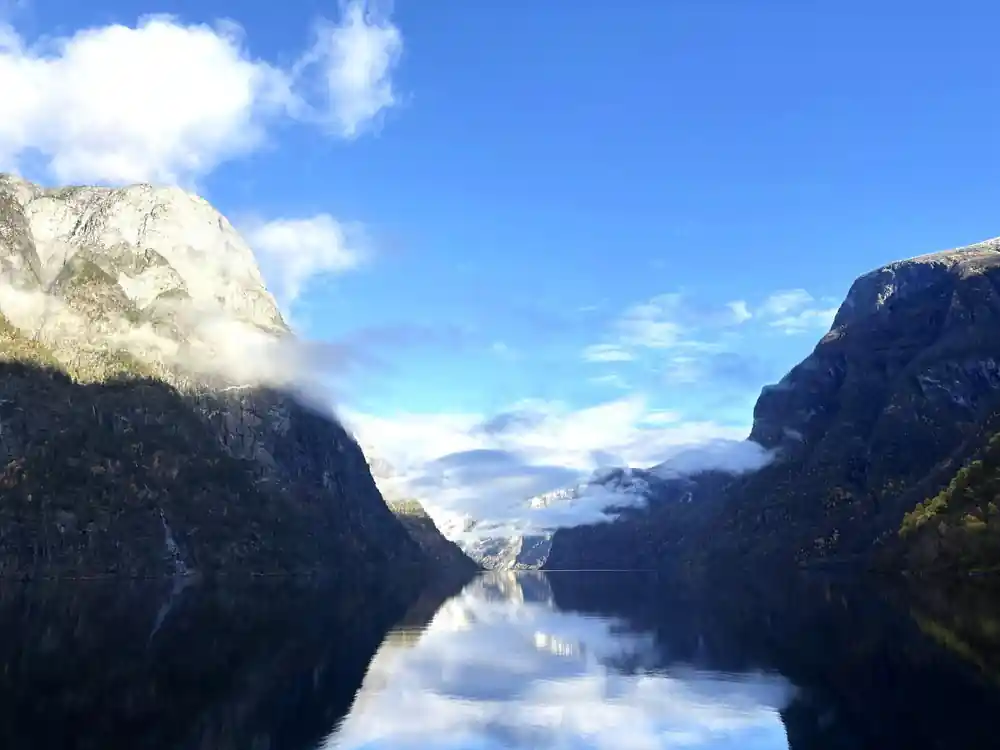
Farms appear on ledges where no road reaches them. Waterfalls come off the tops and are gone behind the coach before you can raise a camera. Then the valley opens onto water at Gudvangen, and the boat is waiting.
Arriving at a fjord from above and inland is a particular experience, and it is one the passengers who take the train or the express boat never have. It is a decent argument for this version of the day on its own.
Have a camera ready rather than packed for this section. It is short, the coach does not stop, and the best few minutes of the outbound leg are over before most people have unzipped a bag.
Three hours
The outbound drive from Bergen to Gudvangen. It is the longest continuous stretch of scenery in the day, not the gap before it.
Which side to sit on
Both sides are good and neither is wasted, so this is a preference rather than a rule.
On the outbound run the water tends to be on the right for the longer stretches beside the Osterfjord, which is the single most reliable piece of seating advice for the morning. On the return over Stalheim the drama is on the other side, so a seat you liked in the morning is not automatically the one you want in the afternoon.
People move around during stops, which is normal and expected. The one thing worth doing is choosing deliberately at 07:30 rather than taking the first free seat and regretting it for three hours.
What the coach is like
It is a modern touring coach with wifi, and the operator makes a point of the vehicle because on a twelve-hour day the seat is a real part of the product.
There are no toilets stops beyond the scheduled ones, so use the facilities at Dale and at the waterfall rather than waiting.
The roads are narrow in places and shared with everything else trying to reach the same fjord, including other coaches, campervans and freight. Drivers here do this daily and it is unremarkable to them; it is worth mentioning only because a first-time passenger sometimes finds the passing places more interesting than the scenery.
Delays happen for exactly that reason, and the operator says so up front rather than after the fact.
One more thing that surprises people: there is no commentary for the whole three hours. The guide talks when there is something to say and lets the window do the rest, which is the right call and not everyone expects it.
Three hours of western Norway before the boat
from US$310Reserve now & pay later